Premium and Platinum tiers
How to invest in AI energy
At the core of anything AI related, there's energy. This deep dive covers the energy industry in great detail, along with several interesting investment ideas.
Introduction
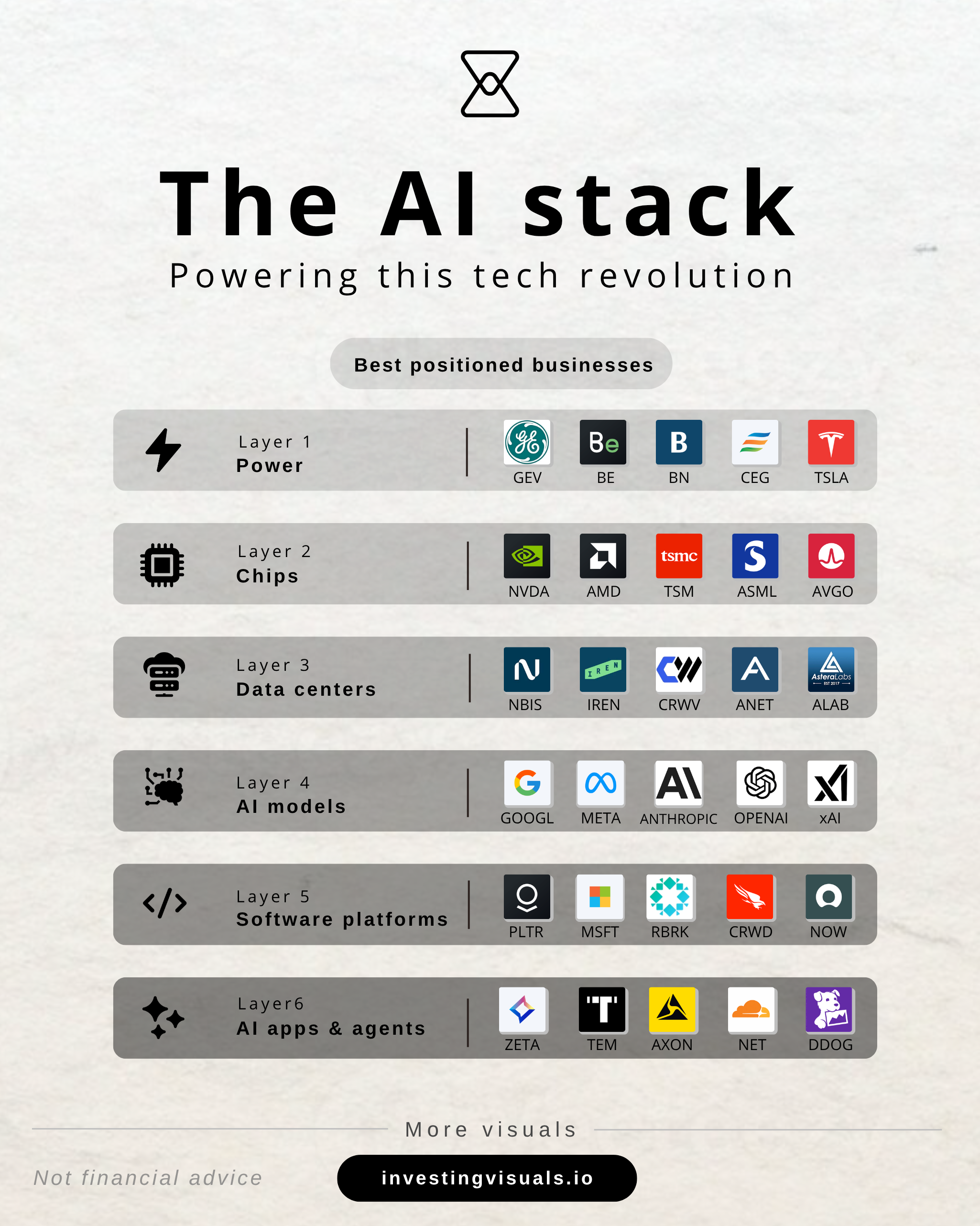
My interest in the energy sector started when breaking down the AI stack to figure out where the most interesting investment opportunities are. At the very foundation of anything AI related, there's energy, something that became increasingly scarce in the last year, particularly as the AI buildout scaled massively, which brings opportunities if you know where to look.
But the energy market is a very fragmented one and can be hard to grasp if you're not very familiar with it. So over the past month I've spent countless hours reading about the sector, how it all works, where the sector is heading and key players when looking at the AI buildout. This research eventually led me to invest in an under-the-radar business which I've covered extensively in this article.
This deep dive is in a sense a follow-up to zoom out and paint the broader picture before diving into what I believe are interesting investment ideas to put on your radar. It is also peer-reviewed by a community member who's working in the energy industry and could provide some very interesting insider insights that helped shape this piece.
The main goal of this deep dive is to really help you understand the industry dynamics, break down the most important segments, risks and moats, and provide an overview of what I believe are the highest potential energy businesses per category, looking at how AI and its power needs are evolving.
1 - The problem
When we look at energy, AI datacenters are unusually difficult loads. They combine three things utilities really dislike:
- Large capacity requirements
- Tight delivery timelines
- Near-zero tolerance for outages
In general, a conventional enterprise site doesn't need power right away. A GPU-heavy AI campus does, particularly when the land, servers, and the customer commitments are already locked in. They need the power and they need it now, because every minute thousands of GPUs sit idle, it costs massive amounts of missed revenue. At a gigawatt scale we're talking tens of millions per day if GPUs sit idle.
The problem is: on average, it takes 5 to 8 years, depending on the region, for grid connections to provide upgrades, meaning it could take up to 2035 for supply and demand to balance out.
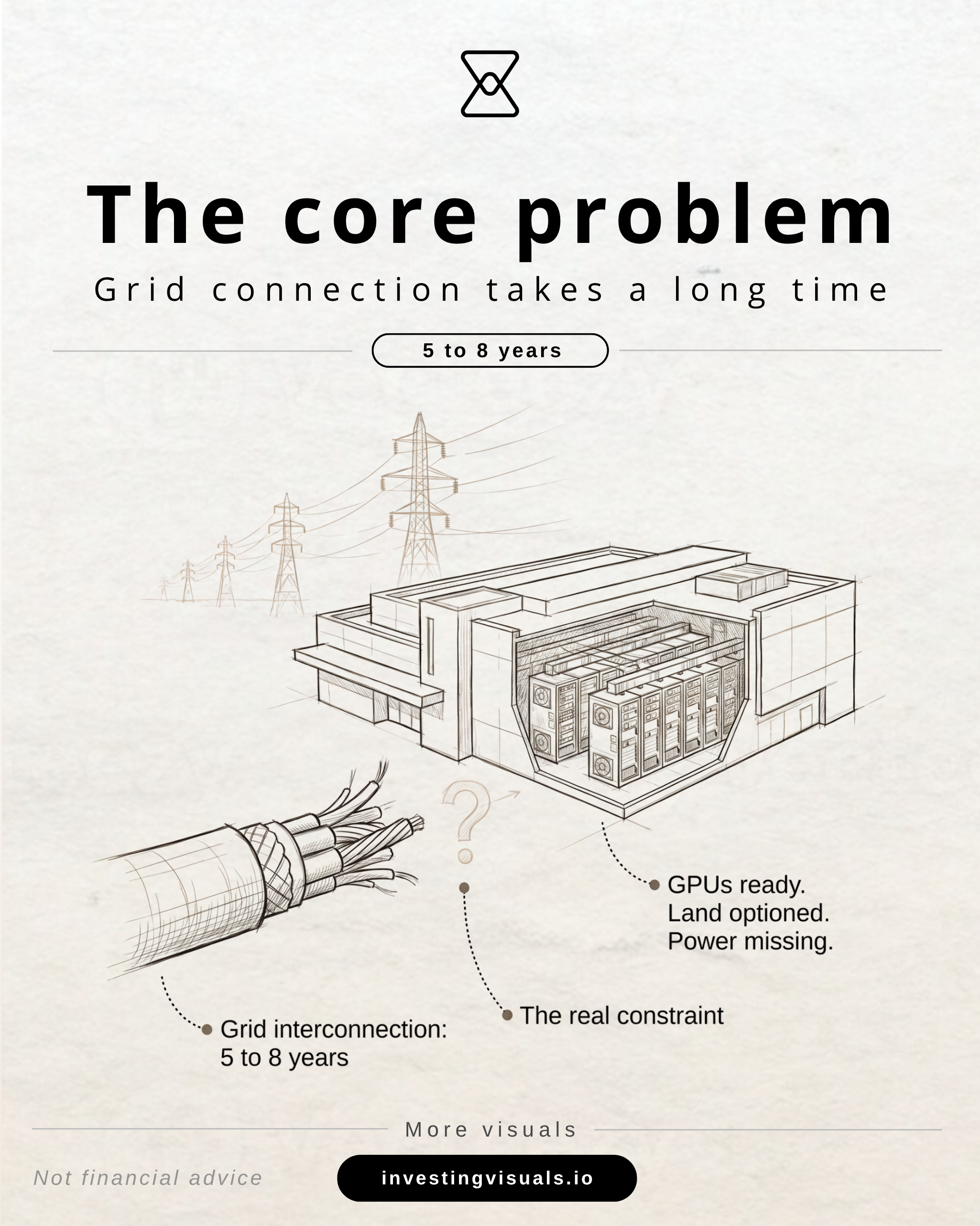
To put this in perspective: A 200 MW campus is roughly the size of a small city's peak demand. A 1 GW AI campus is an industrial power project and equals the power usage of 820,000 US households.
It takes several years for new power plants to get official permission and successfully plug into the electricity network to start producing power. More proactive, flexible approaches can compress that to 2-12 months, depending on scale. It's this gap where the "behind-the-meter" investment thesis lives and the primary focus of this deep dive.
💡
Behind the meter means generation or storage located on site or directly co-located with the datacenter. The operator doesn't rely solely on a distant grid upgrade. That can include solar, batteries, fuel cells, gas turbines, reciprocating engines, geothermal, and eventually small modular reactors.
The investment question isn't whether power demand is rising. Because it clearly is. The real questions are where the constraint are most pronounced, which technologies solve it fastest, and which listed companies have the product and the execution to turn this into durable earnings.
Let's first look at the solution landscape because it's crucial context to understand before diving into the specific businesses.
2 - Five solution buckets
There is no single silver bullet to solve it all. I actually think that's what makes this theme so interesting. There are different site sizes, geographies, and carbon constraints that call for different tools.
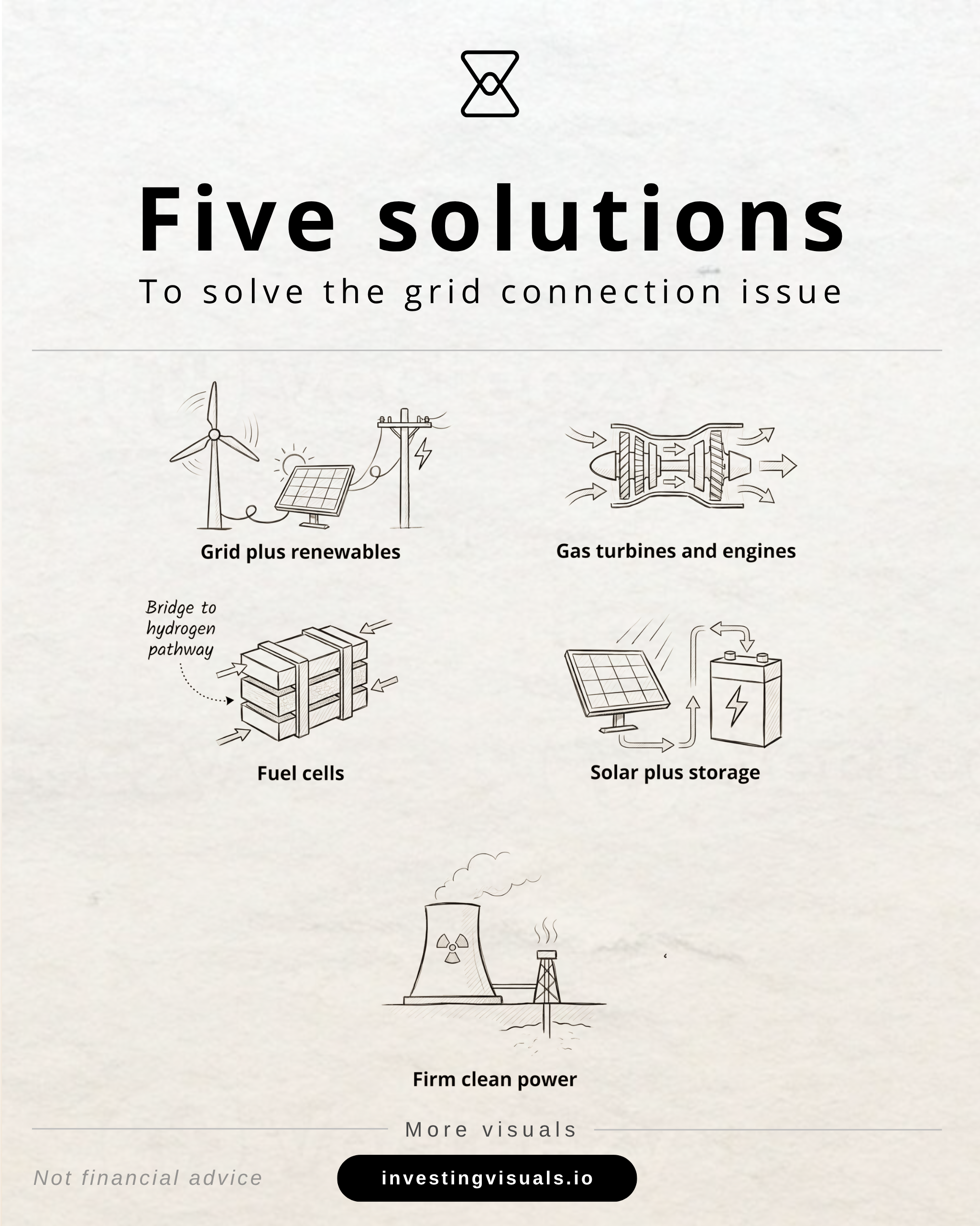
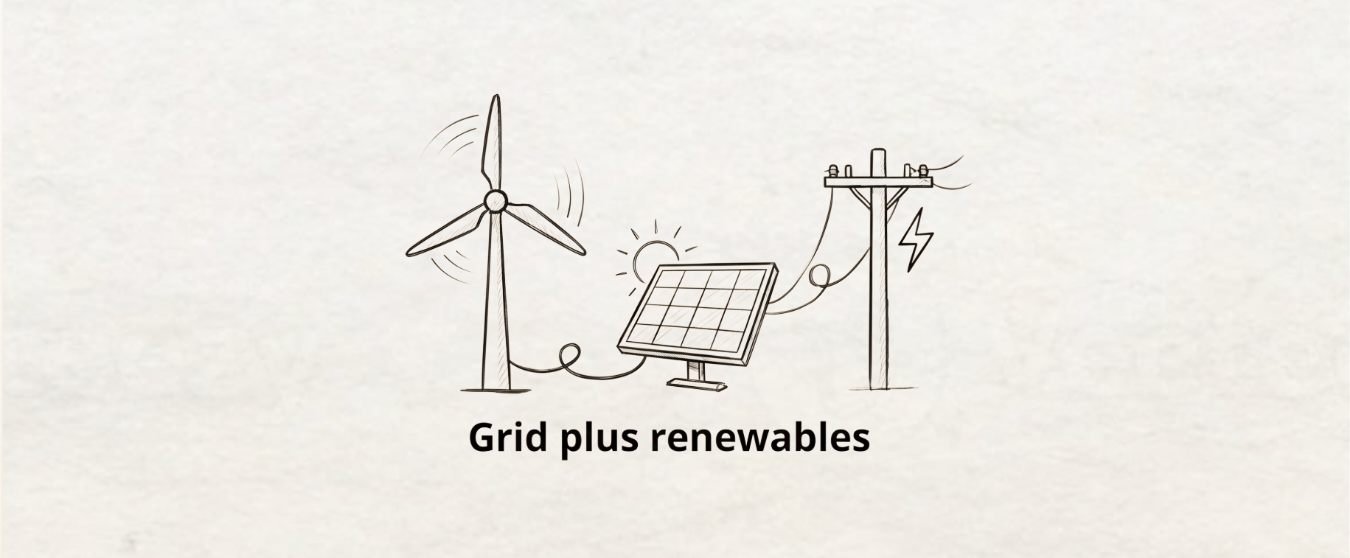
1. Grid plus contracted renewables
This is still the default where interconnection capacity exists. Utility-scale renewables offer low energy cost, and large buyers can sign power purchase agreements (PPAs) to secure long term electricity at predictable prices. The weakness: a contracted renewable energy commitment isn't the same as having physical power available at one specific site at one specific hour. So you need something else to fill this gap.
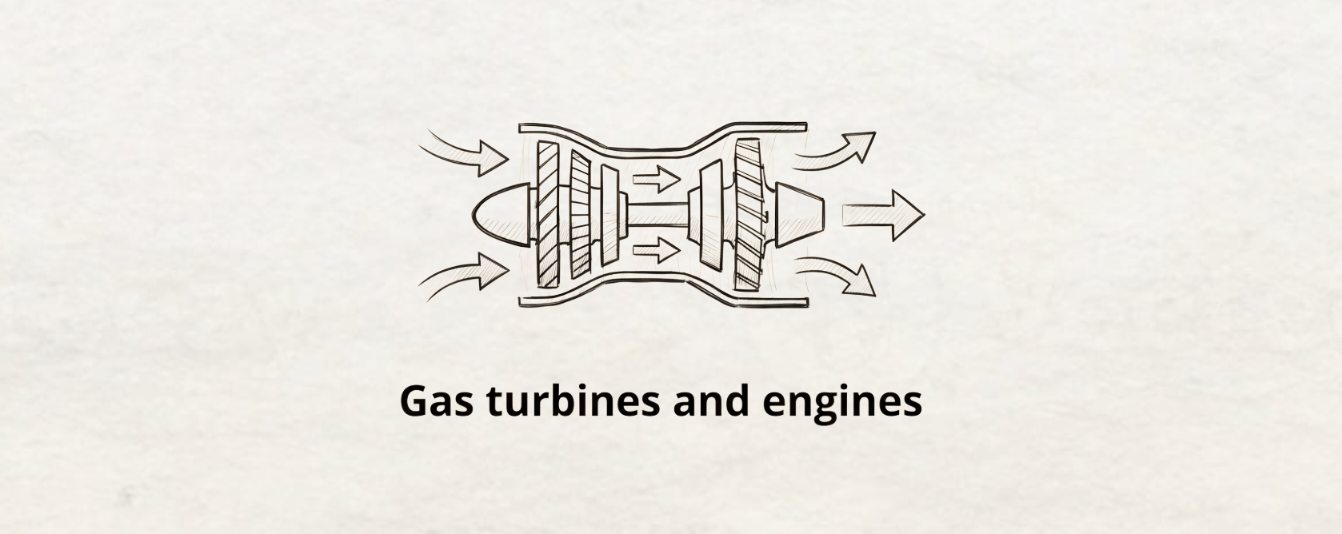
2. Behind-the-meter gas turbines and engines
If the site has fuel access and permits, on-site gas turbines or reciprocating engines can deliver dispatchable power far faster than waiting for transmission upgrades. It's not the cleanest way, but for large campuses it's often the most practical near-term solution.
3. Fuel cells and hydrogen-capable systems
Fuel cells sit in an interesting middle ground. High electrical efficiency, modular deployment, good reliability, and a cleaner local emissions profile than most combustion systems. Solid oxide fuel cells (SOFCs) can run on natural gas today and carry a credible pathway toward hydrogen over time. That combination is why datacenter operators are interested in them, despite higher upfront cost.

4. Renewables plus storage
Solar plus batteries works very well in the right geography. They are quick to deploy, predictable in sun-rich regions, and increasingly paired with storage to smooth intermittency. Lazard's 2025 report about Levelized Costs of Energy (LCOE) puts utility solar plus storage at roughly 50 to 131 dollars per MWh unsubsidized. They state that renewables remain the most cost-competitive form of new build generation on an unsubsidized basis.
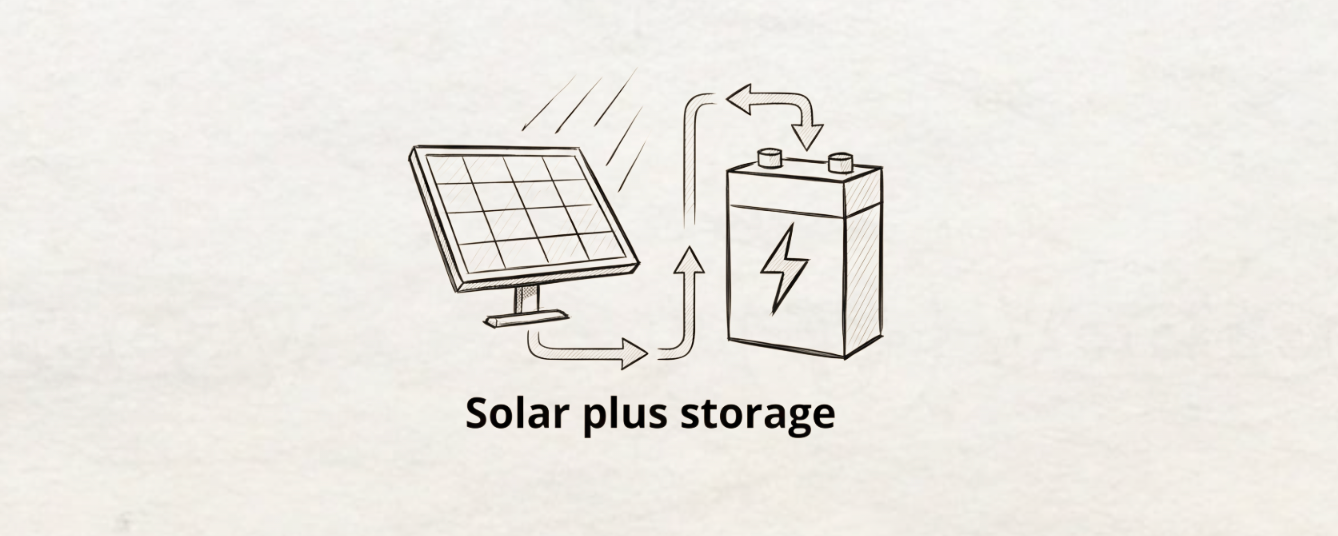
The catch: a 4-hour battery is a useful shock absorber, but not a power plant that can carry a giant AI campus through every bad weather week. So batteries only go so far depending on the scale of the data center.
There are some examples in Austria where 8h+ batteries get installed to get closer to 24/7 renewables, so in some years this might be a solution in reliably sunny regions.
5. Firm clean power
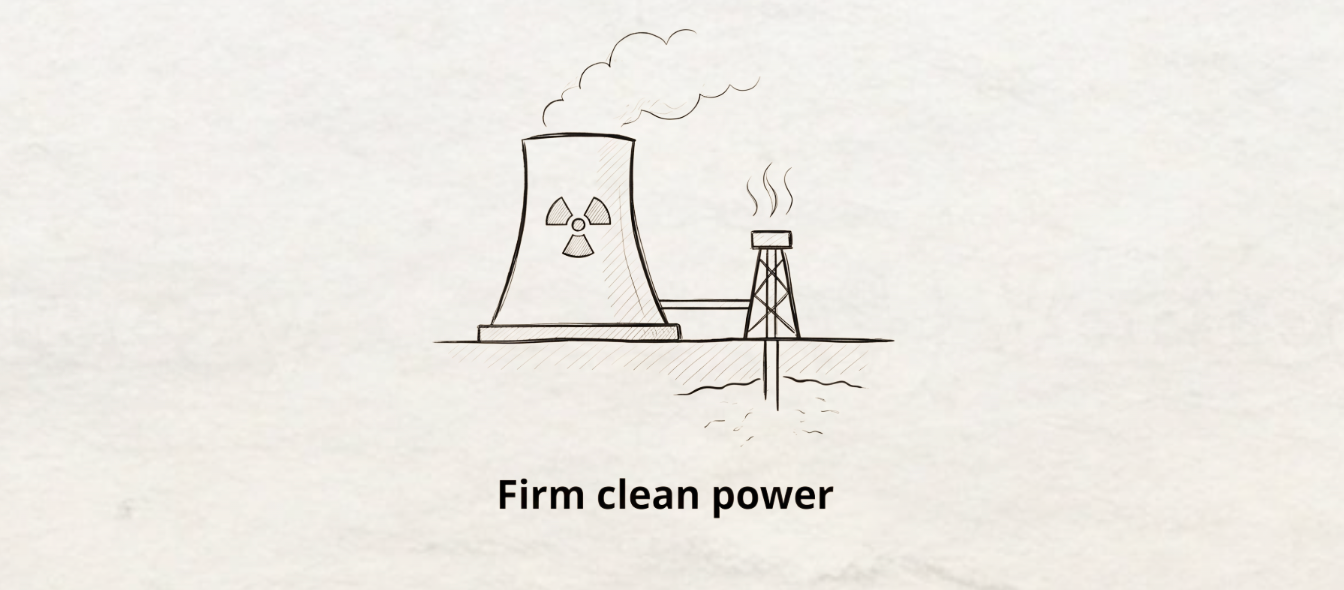
Firm generation is any power source that can generate electricity on demand, continuously at its rated capacity, regardless of weather or time of day.
It covers geothermal, small modular reactors (SMRs), and enhanced geothermal systems.
What makes them interesting is the combination of near-zero carbon, 24/7 baseload output, and limited fuel cost volatility. Unlike solar or wind, they do not need a battery partner to deliver reliable power around the clock. For large AI campuses that need hundreds of megawatts of clean, always-on electricity, this is a great option to go with.
The catch here is time and track record:
- Time: Geothermal projects in established resource zones can be operational in roughly 3 to 5 years. SMRs are longer, with most realistic timelines sitting at 7 to 12 years for first power. So if you need power today, this isn't going to solve that.
- Track record: there are only 2 SMRs in operation in the world (one in China, one in Russia), and it‘s not guaranteed that current designs will actually work.
The energy market map
As you can see from the overview above, the type of solution businesses go for, depend on scale and time-to-power (i.e. how quickly do they need it).
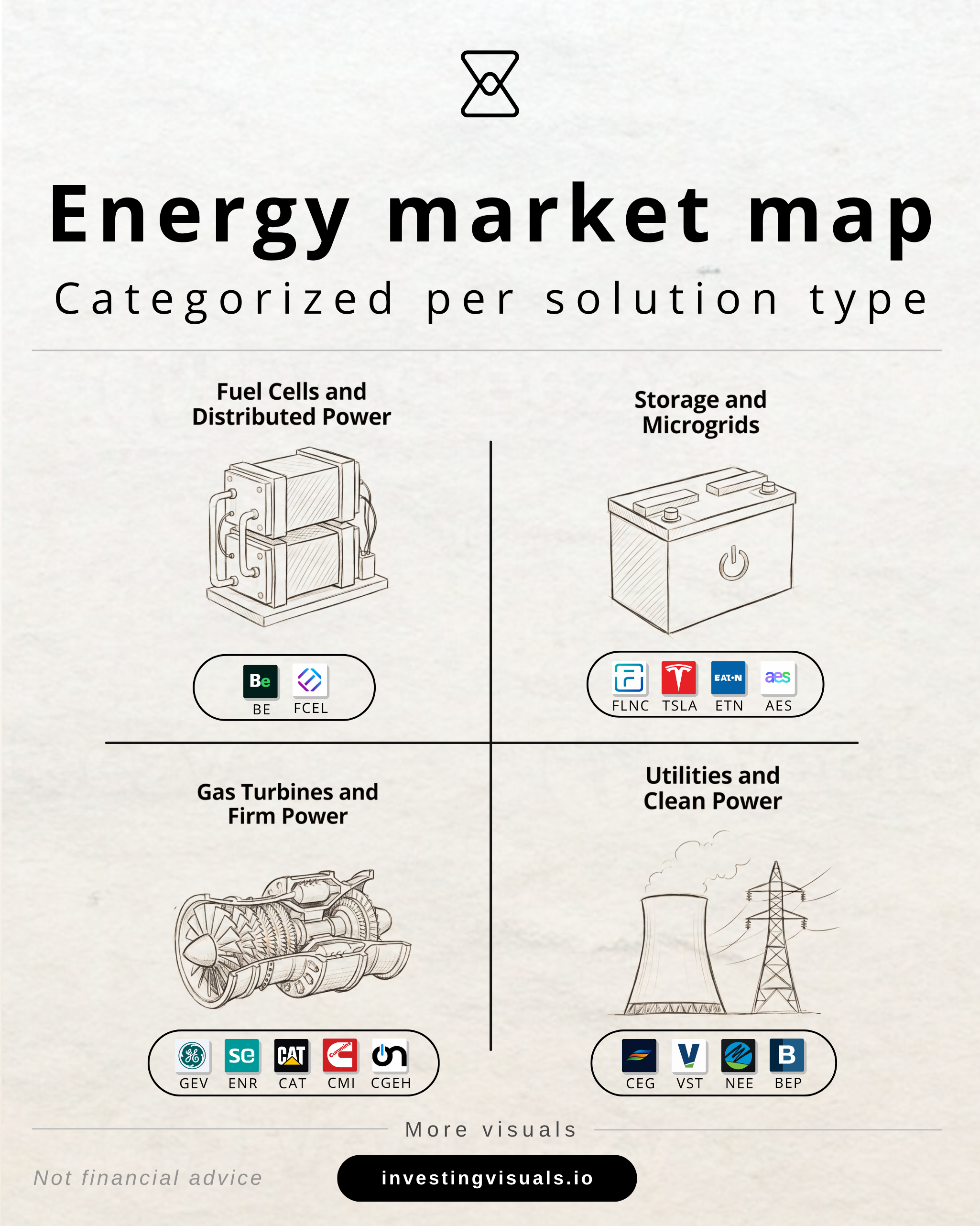
If we map which businesses operate in each of the above mentioned solution buckets, this is what the energy market map looks like:
It's about finding the right tool for the job
3 - Matching solutions to AI data center site size
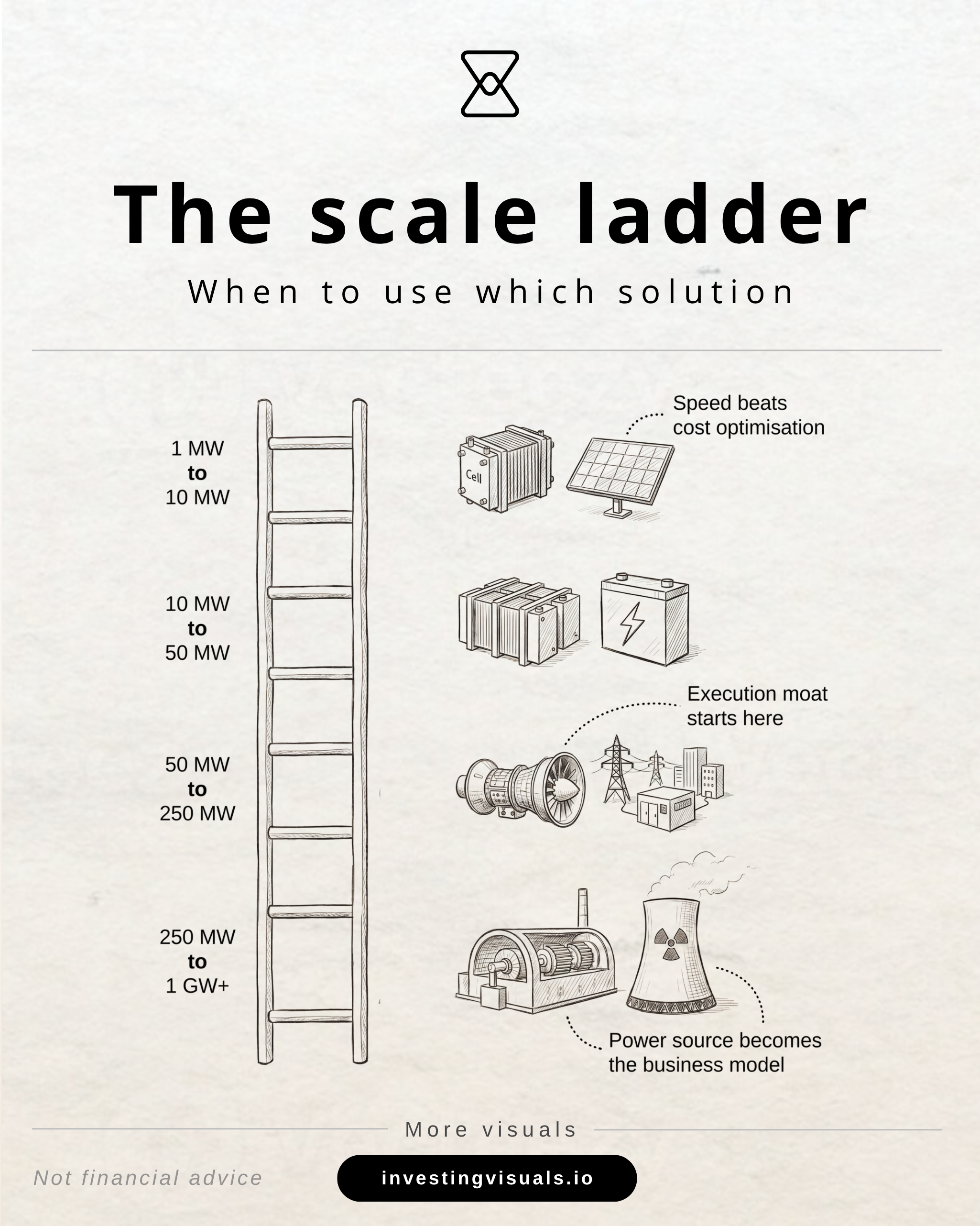
The best way to think about power solutions is by site scale. A 5 MW edge deployment needs a completely different solution than a 500+ MW AI campus.
Small sites: 1 MW to 10 MW
Edge nodes, enterprise AI deployments, modular builds. Here, modularity and speed matter more than optimizing the last dollar of energy cost. Solar plus storage works well in sunny regions. Fuel cells or gas turbines fit because they scale in modules and deliver excellent power quality.
Best positioned businesses:
- Bloom Energy (BE)
- Generac (GNRC)
- Fluence (FLNC)
- Eaton (ETN)
- Capstone Energy (CGEH)
In chapter 6 and 7, I'll cover all the businesses in this section in much more detail.
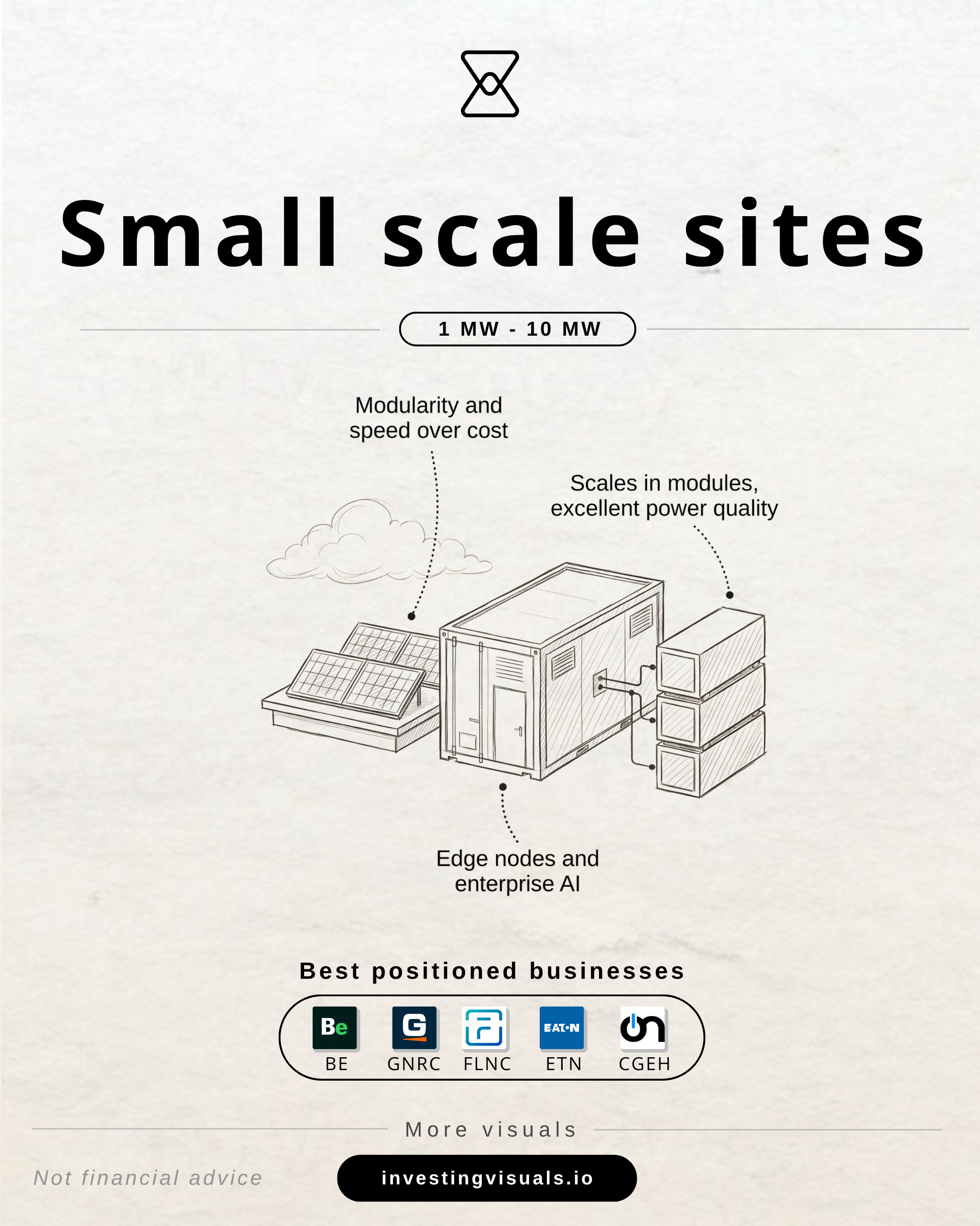
| Company | Best fit | Time to power | Key constraint |
|---|---|---|---|
| Bloom Energy (BE) | 1 MW to 10 MW modular on-site fuel cell generation | 6 to 12 months | Gas infrastructure required, higher upfront capex than simple backup |
| Generac (GNRC) | Distributed backup and small-scale prime power | Weeks to a few months | Not designed for continuous prime duty at larger loads |
| Fluence (FLNC) | Battery storage layer in solar hybrid small sites | 3 to 9 months | Storage alone does not provide firm baseload |
| Capstone Green Energy (CGEH) | Microturbine-based prime and CHP power for edge and small AI sites | 3 to 9 months | Small unit output requires parallel stacking above a few MW |
| Eaton (ETN) | Power distribution, UPS systems, and switchgear for small critical sites | Weeks to a few months | Not a generation source; depends on upstream power being available |
Mid-sized sites: 10 MW to 50 MW
This is where things get increasingly interesting. Many enterprise and colocation clusters live here, alongside early AI inference campuses. These loads are too large for rooftop solution but small enough that modular fuel cells, engine-based microgrids, and solar plus storage hybrids are all viable.
Speed often dominates cost optimization at this size. Bloom Energy (BE) has the strongest presence here as incumbent but Capstone Energy (CGEH) is worth watching too.
Their microturbines scale from 65 kW up to 30+ MW in parallel configurations, run on natural gas, biogas, or hydrogen blends, and are low maintenance. They recently introduced an 800 VDC microturbine, designed to feed next-generation AI racks directly and eliminate several AC/DC conversion stages. Fluence (FLNC) becomes relevant here as the energy storage layer in hybrid systems, smoothing renewables and handling peak demand.
Best positioned businesses:
- Bloom Energy (BE)
- Capstone Energy (CGEH)
- Fluence (FLNC)
- FuelCell Energy (FCEL)
- Cummins (CMI)
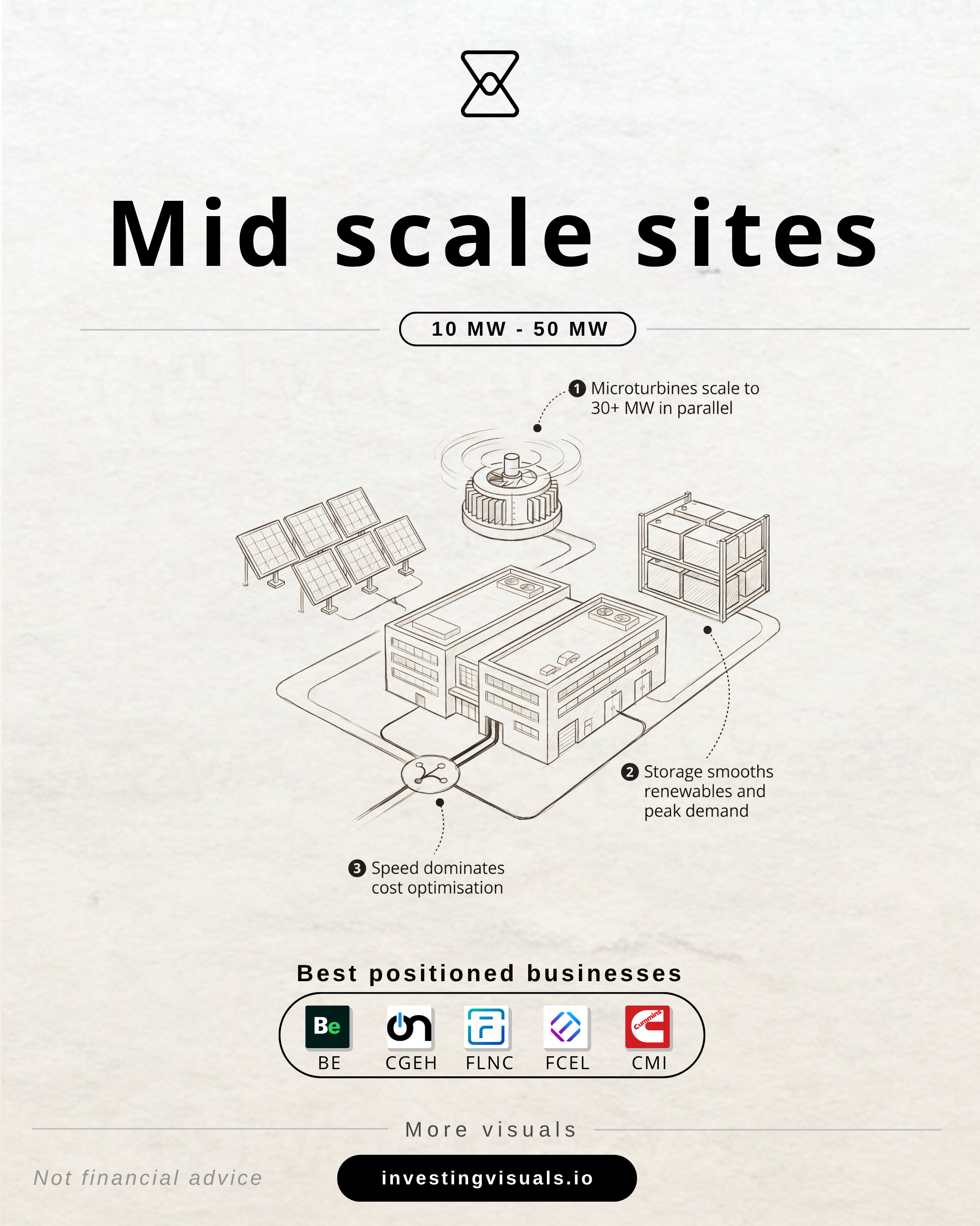
| Company | Best fit | Time to power | Key constraint |
|---|---|---|---|
| Bloom Energy (BE) | 5 MW to 50 MW modular SOFC on-site generation | 6 to 18 months | Gas access required, capex higher than pure combustion alternatives |
| Capstone Green Energy (CGEH) | 1 MW to 30 MW+ microturbine microgrids, CHP integration | 3 to 12 months | Smaller scale per unit requires parallel configurations at larger loads |
| Fluence Energy (FLNC) | Storage layer in hybrid solar or gas microgrid systems | 3 to 9 months | Storage alone does not provide firm baseload at this size |
| FuelCell Energy (FCEL) | Stationary fuel cell generation for small critical loads | 12 to 18 months | Weaker commercial momentum in datacenter niche, balance sheet risk |
| Cummins (CMI) | Engine-based distributed generation and backup systems | Weeks to 6 months | Carbon profile less attractive in emissions-sensitive markets |
Large sites: 50 MW to 250 MW
At this scale, the site starts to resemble a small power system in its own right. Renewable-only solutions struggle unless the geography is exceptional. These campuses typically need firm generation plus some mix of solar, batteries, and grid support.
Best positioned businesses:
- Bloom Energy (BE)
- GE Vernova (GEV)
- Siemens Energy (ENR)
- Caterpillar (CAT)
- Cummins (CMI)
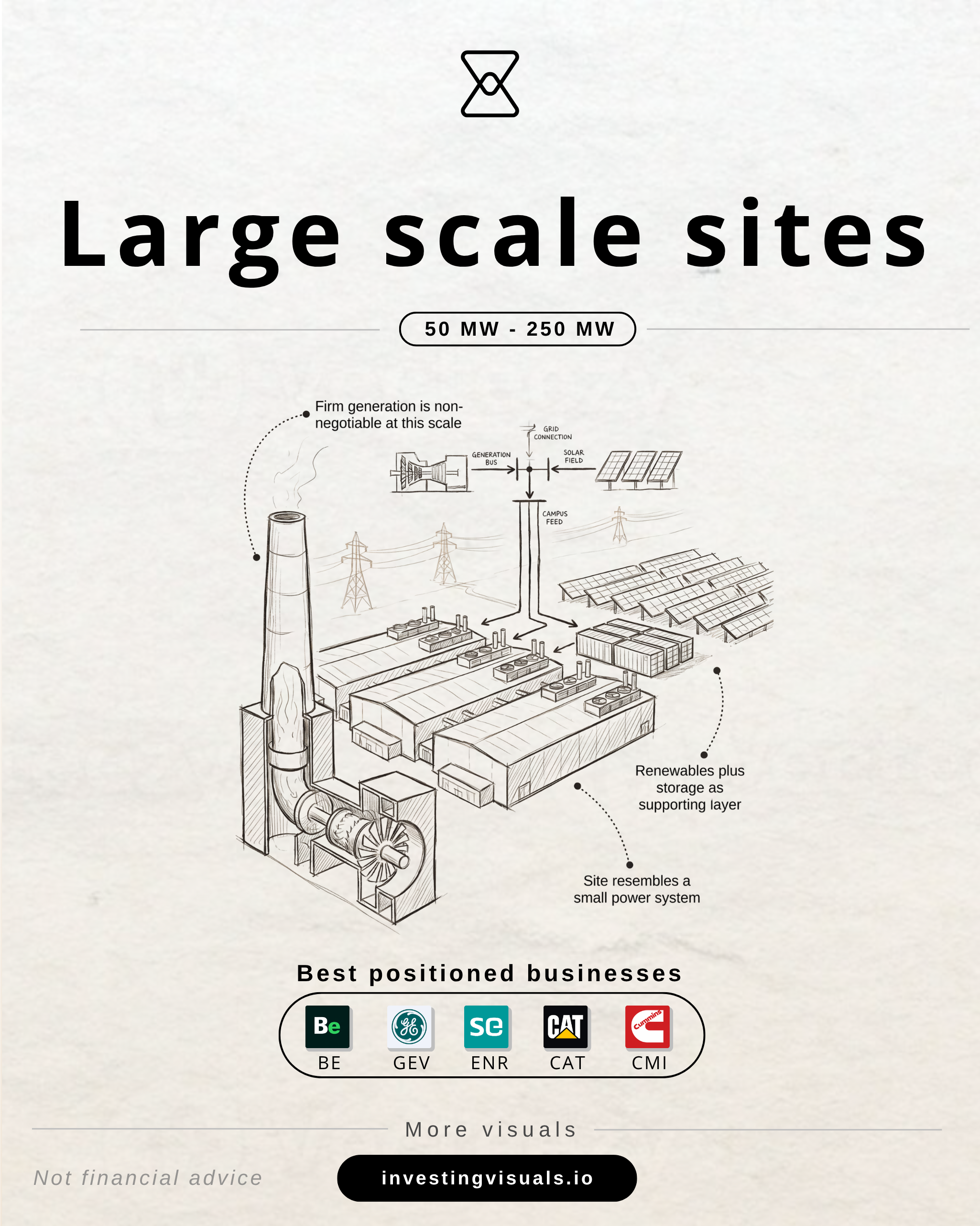
| Company | Best fit | Time to power | Key constraint |
|---|---|---|---|
| GE Vernova (GEV) | Large gas turbines and grid equipment for 50 MW to 250 MW sites | 2 to 4 years for new turbine orders | Backlog sold through 2030, limited near-term slot availability |
| Siemens Energy (ENR) | Modular gas turbine power plants, 100 MW to 500 MW configurations | 2 to 3 years with modular approach | Supply chain pressure and turbine production capacity |
| Caterpillar (CAT) | Large generator sets and prime power systems for 10 MW to 100 MW | Weeks to 12 months depending on configuration | Carbon exposure, fuel cost sensitivity at continuous duty |
| Cummins (CMI) | Engine-based distributed generation, hydrogen-ready platforms | Weeks to 9 months | Less competitive above 50 MW without multi-unit configurations |
| Bloom Energy (BE) | Modular SOFC layer within larger hybrid campus architectures | 6 to 18 months | Rarely the sole power source at this scale, gas access required |
Mega campuses: 250 MW to 1 GW+
A campus of this scale takes 3 to 5 years to build out, and the power infrastructure almost always sits on the critical path. If the first 100 MW cannot be energized, the servers do not arrive and the capital model comes to a grinding halt.
This pushes developers toward contracting with existing generation owners, co-locating beside nuclear or gas plants, or reserving turbine slots years in advance. The procurement decision happens before the first shovel goes in the ground.
Large gas, co-located nuclear, geothermal, and large hybrid microgrids are the most viable options here. At this scale, industrial execution and existing asset ownership matter most for these types of sites.
Best positioned businesses:
- GE Vernova (GEV)
- Siemens Energy (ENR)
- Constellation Energy (CEG)
- Vistra (VST)
- Caterpillar (CAT)
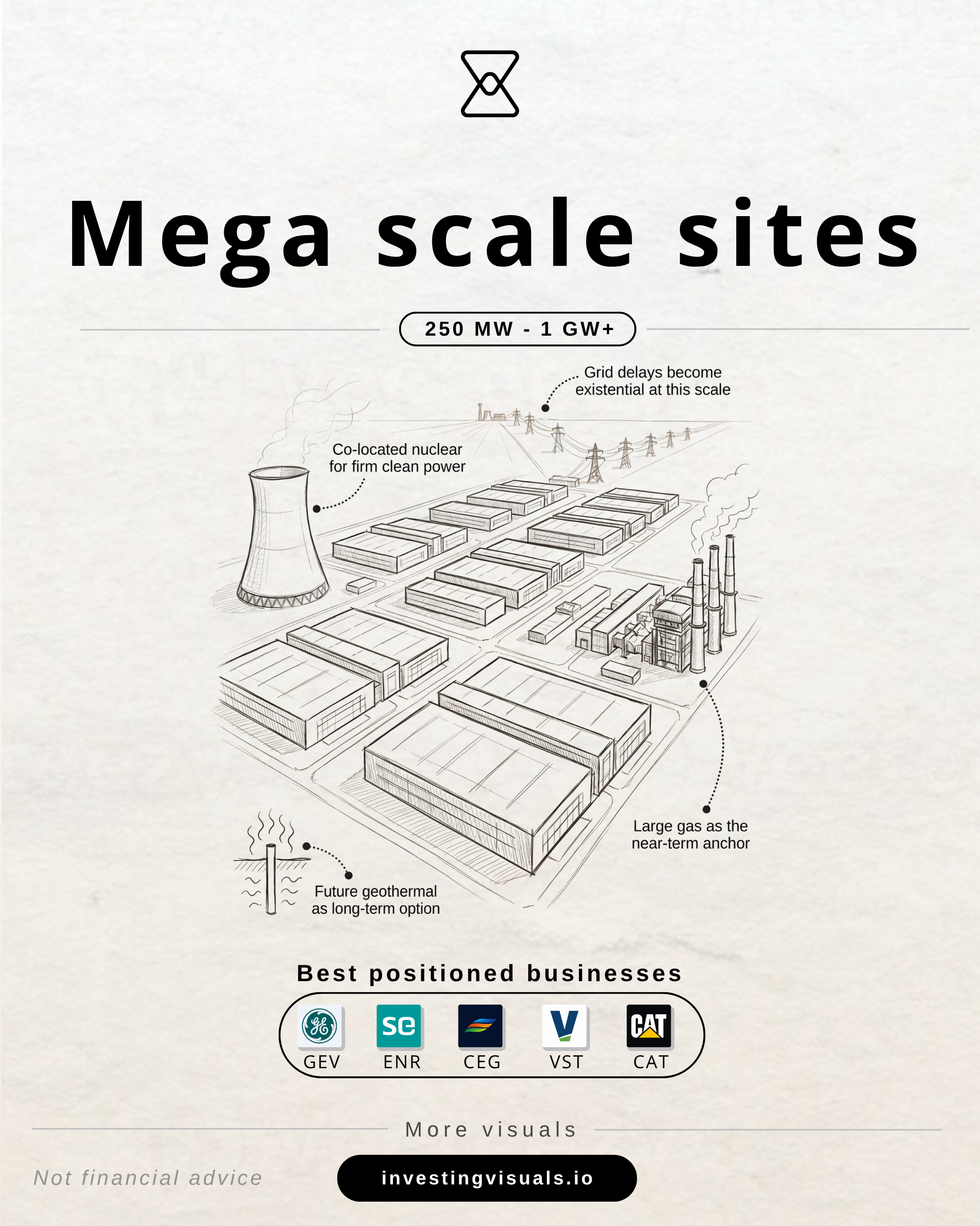
| Company | Best fit | Time to power | Key constraint |
|---|---|---|---|
| GE Vernova (GEV) | 100 MW to 1 GW+ gas campus power | 3 to 4 years for new turbines | Slot availability sold through 2030 |
| Siemens Energy (ENR) | 500 MW modular gas or steam configurations | 2 to 3 years with modular approach | Turbine production capacity and supply chain |
| Constellation Energy (CEG) | 250 MW to 2.5 GW nuclear co-location | Faster via existing plants if co-location rules are clear | Fixed nuclear asset base, regulatory complexity |
| Vistra (VST) | Large gas and nuclear fleet for long-term datacenter contracting | Existing capacity available now, new build 3 to 5 years | Finite existing fleet, carbon exposure on gas assets |
| Caterpillar (CAT) | Auxiliary and backup generation at campus scale | Weeks to 12 months depending on configuration | Not the primary power source at this scale, continuous duty limits |
In short
It really depends on the scale of an AI data center which power solution is the best way to go. As they scale over time, power requirements evolve. I hope the overview gives you a better understanding how to dissect the industry from an AI data center scale lens.
Enjoy content like this? Consider subscribing to gain access to all in-depth research, visuals, tech write-ups, our community and my portfolio.
4 - The cost picture
I want to also spend a moment on costs here, because they are of vital importance to data center operators since they account for 20% - 40% of total data center operating expenses.
In a report by equity firm Lazard, 2025 numbers confirm that renewables dominate on raw unsubsidised energy cost:
- Utility-scale solar: roughly $38 to $78 per MWh
- Onshore wind: roughly $37 to $86 per MWh
- New-build gas combined cycle: $109 to $251 per MWh
- Gas peaking: $141 to $315 per MWh
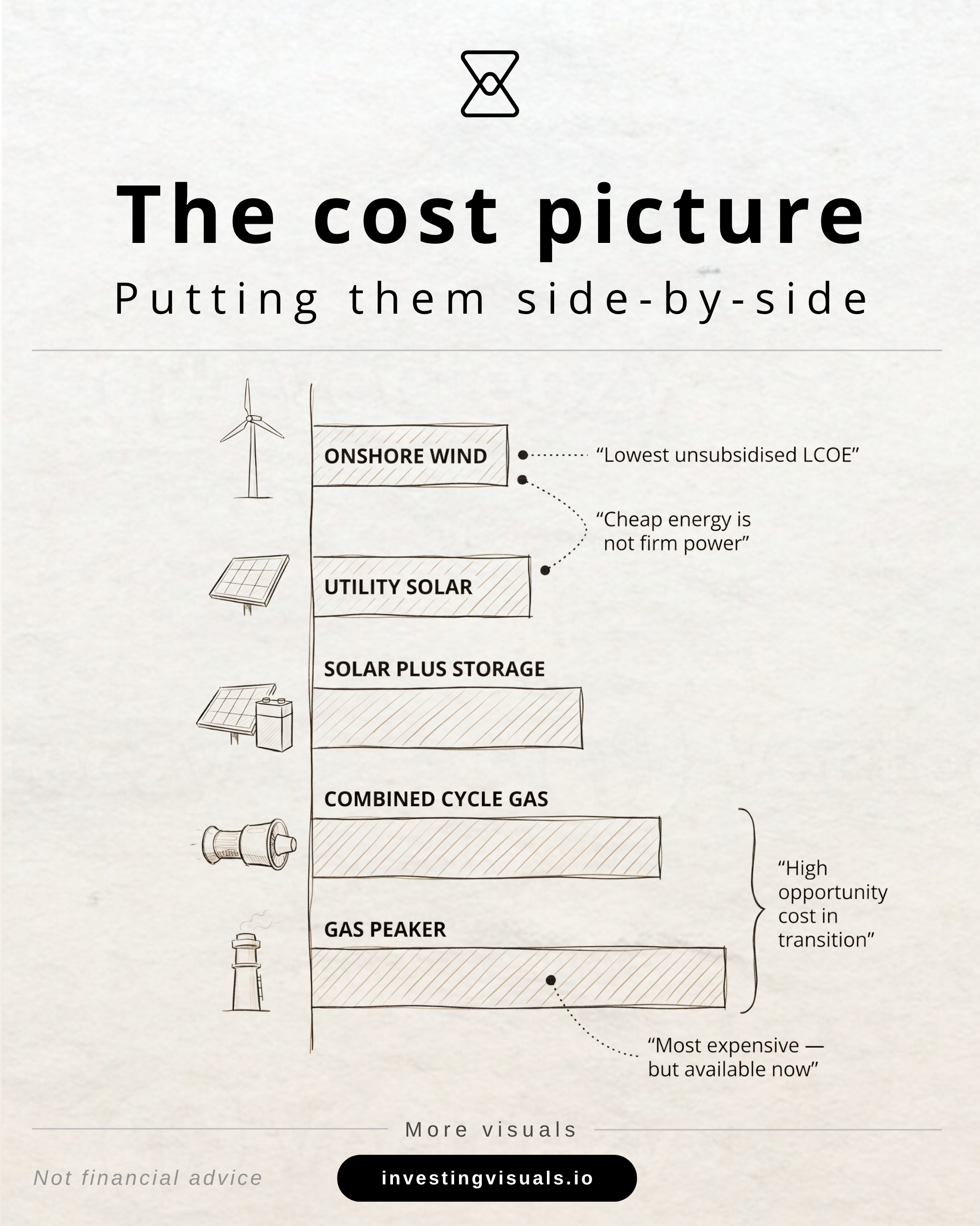
If we look at the cost picture, the fossil solutions look expensive. But there's an important nuance: cheap energy isn't the same as power delivered to one exact site, at one exact hour, under one specific interconnection constraint.
When you factor in the opportunity cost of delayed energisation, a gas engine solution that comes online in 14 months can be economically superior to the cheapest clean option that will take four years to arrive. To be clear, this isn't a defense of fossil generation as a long-term strategy. It's how the current energy decisions are made given the time-to-power urgency in the AI buildout.
An important implication that comes with this dynamic: once the most urgent energy problem is solved, I think it's likely we'll see a shift towards more renewable sources at the expense of fossil given their lower cost per megawatt and global shift towards more renewable sources.
Research by Ember (an energy think tank) shows 2025 battery storage work adds another important nuance. Large utility-scale Battery Energy Storage System (BESS) costs have fallen sharply enough to make solar delivered outside daylight hours a lot more competitive in many markets. Some analyses point to all-in battery capex near $125 per kWh and stored solar becoming competitive around $76 per MWh outside China and the US. That's pretty significant.
But not (yet) from necessary to sufficient in my view. The last reliable megawatt on a hot evening, when the grid usage is peaking and every AI campus in the region is running at full load, is where behind the meter solution are still needed in the near term to ensure a reliable energy flow.
5 - Does energy have a moat?
A question I asked myself when looking at any company in this space: what would it actually take to displace them and do they have a defensible position? For a long time, I viewed energy as a commodity, but that changed when looking into the behind-the-meter solutions.
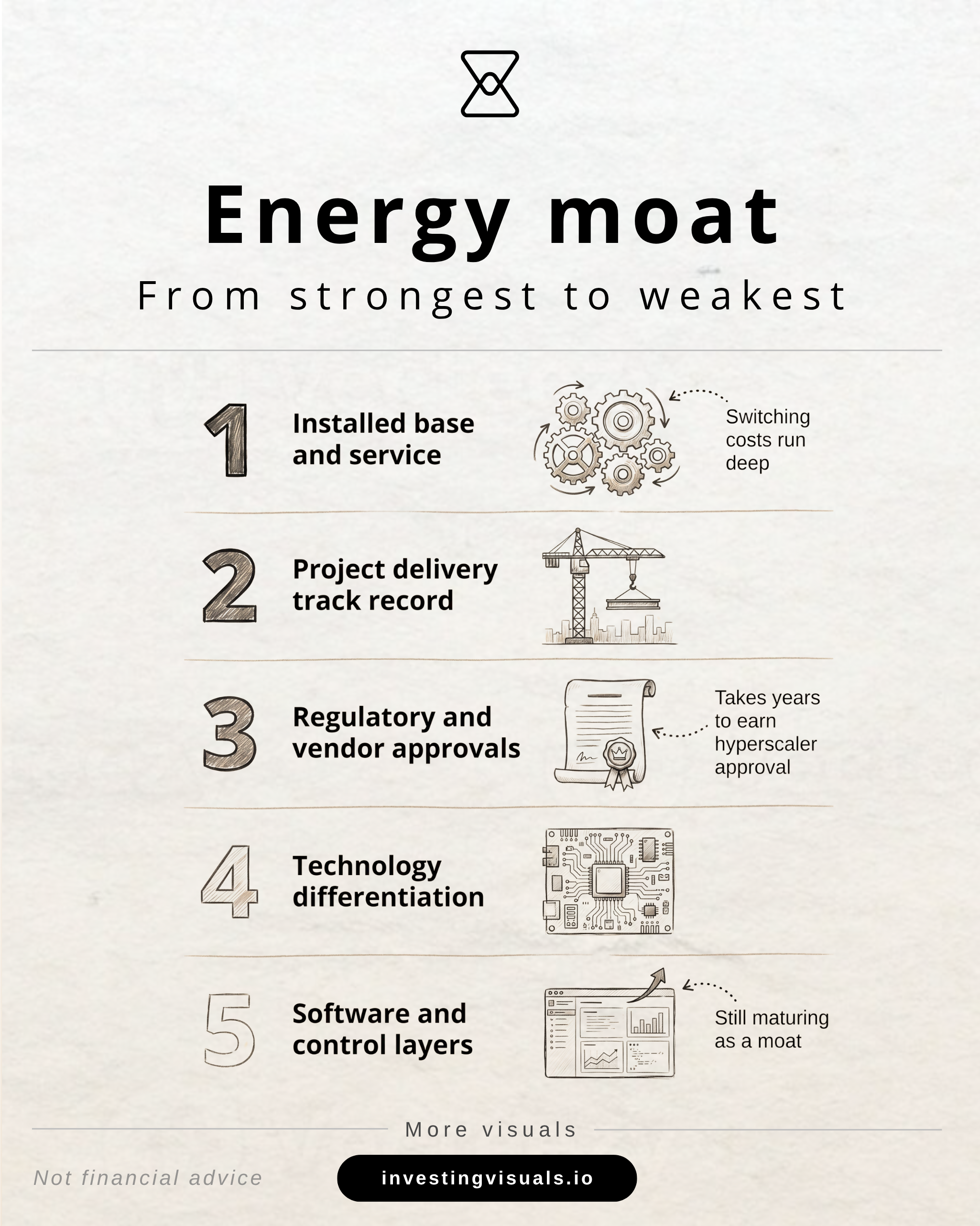
In my view, the moat ranking from strongest to weakest looks like this:
- Installed base and long-term service relationships. Once a datacenter campus is designed around a given power architecture, switching costs can be very high. It affects electrical room design, cooling, redundancy planning, emissions permitting, and service contracts. Specialized electricity equipment, such as gas turbines or converters, can come with very restrictive maintenance requirements, for example that only the manufacturer is allowed to service it, and they will not even provide a full documentation or maintenance handbook due to "proprietary and confidential information.". Especially given the high demand for turbines and converters, the respective suppliers can easily dictate such maintenance clauses in the contracts, and thereby ensure future revenue streams.
- Ability to deliver complex projects on time. Execution track record in mission-critical environments is quite underappreciated. It's what data center operators weigh heavily when choosing their energy supplier. A strong track record works like a magnet for new customers.
- Regulatory approvals and product credibility. Becoming an approved vendor for a hyperscaler's infrastructure programme takes years of documented uptime.
- Technology differentiation. Meaningful, but only durable if the installed base and service layer are strong too. In itself technology differentiation isn't that strong of a moat in my opionion due to the vast amount of alternative options customers can pick from. It's a very competitive space.
- Software and control layers. Optimising hybrid systems is increasingly valuable, but energy software moats are still maturing.
What I personally find very interesting about the space as the AI buildout continues: in the next three to five years, I believe execution moat will matter far more than pure technology moat. Time-to-power is in my view one of the most important metrics to look at in the years ahead.
6 - Quality tier list
With businesses spread across different scale and solution categories, it's easy to get lost. So I built a quality tier list to score all of the businesses mentioned in this deep dive, and rank them on fundamentals:
| Criterion | Weight | Definition Used |
|---|---|---|
| Wide moat | 20% | Structural competitive advantage; IP, switching costs, network effects, scale, and narrow-segment dominance |
| Valuation | 15% | Attractiveness of current price relative to business quality; 5 = potentially undervalued, 1 = severely stretched relative to peers and growth profile |
| Growth runway | 15% | Addressable market expansion potential; higher is better |
| Mgmt Quality & Alignment | 15% | Founder still active, meaningful insider ownership, or demonstrably owner-mindset management |
| Proven track record | 15% | Consistent execution on revenue, margins, and capital allocation over multiple cycles |
| Conservative balance sheet / manageable leverage | 10% | Net cash preferred; net debt penalised by leverage trajectory and FCF coverage |
| Stable or improving margins | 10% | Gross and operating margin trend over the trailing 12–24 months |
I also created another tier list that focuses on data center positioning. Interestingly, the outcome of both tier list differ materially. Let's start with the quality tier list first:
This post is only for subscribers on the
Premium and Platinum tiers
Subscribe to continue reading
Written by