Premium and Platinum tiers
Rocket Lab deep dive - Is it worth the price?
Rocket Lab is becoming much more than a rocket company, but how much of that potential is already priced in? I unpack the business, risks, and valuation to help you decide whether Rocket Lab is worth your money.
Introduction
It's been quite a while since I did a deep dive, so I figured it was about time for one. I asked our community which business I should cover and Rocket Lab came out on top with 50% of the votes.
Rocket Lab is one of those names I've been watching from the sidelines for a long time. Probably over a year now, but I never initiated a position. I really like what the company is building but I couldn't bring myself to pay the price for it.
But today is a great time to reevaluate, as the stock is down 60% from its prior high.
The questions I'd like to answer in this deep dive:
- What makes Rocket Lab tick and how do they differentiate themselves versus big brother SpaceX?
- Is the valuation attractive enough relative to what is currently priced into the stock?
What fascinates me about Rocket Lab is how they've been able to coexist alongside a behemoth like SpaceX. And not just that, Rocket Lab is thriving. Revenue growth is strong, they are taking major leaps towards becoming a full stack space business and, on top of that, they have a visionary leader.
Let's dive in and first have a look at how this all started.
1 - Rocket Lab's mission
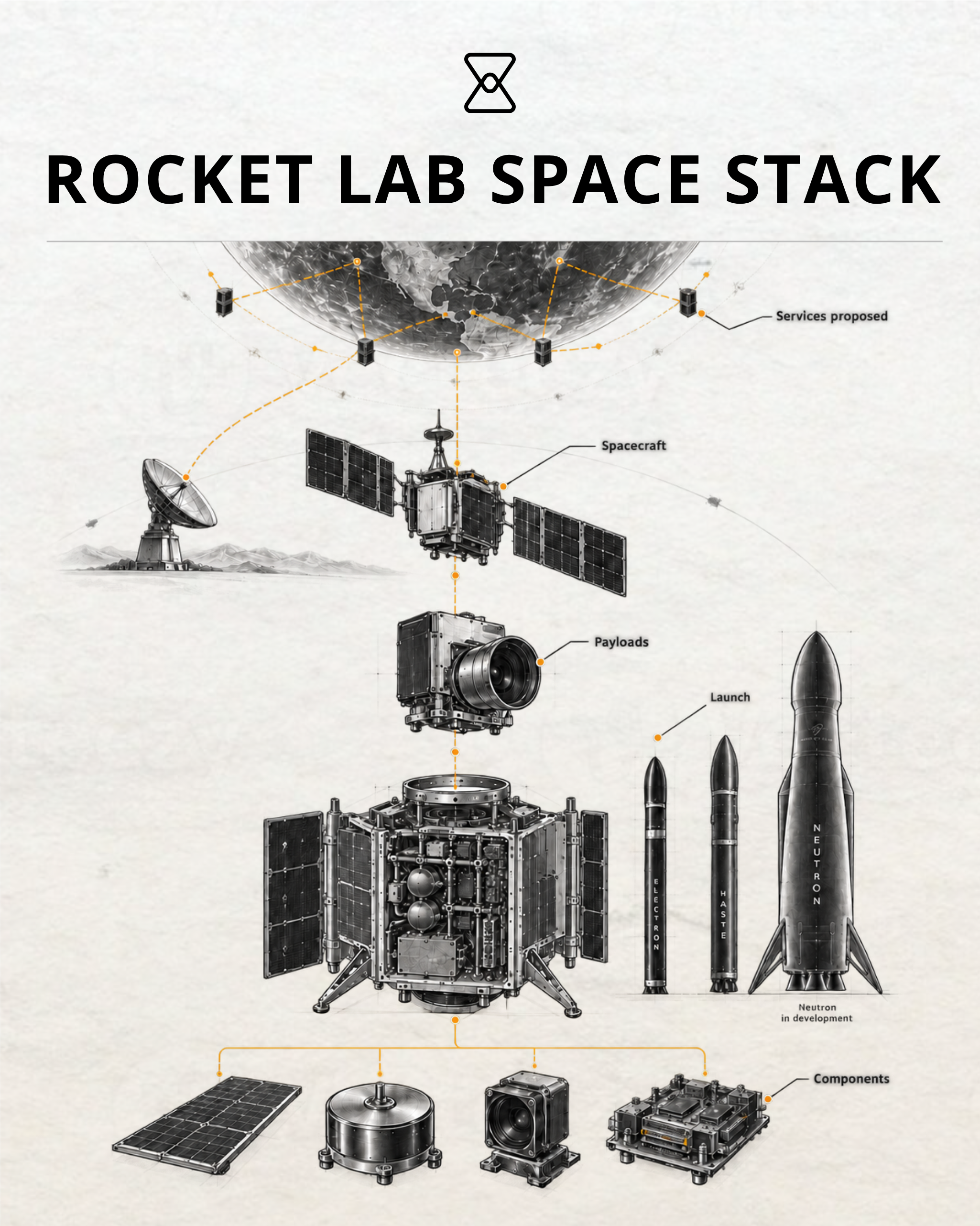
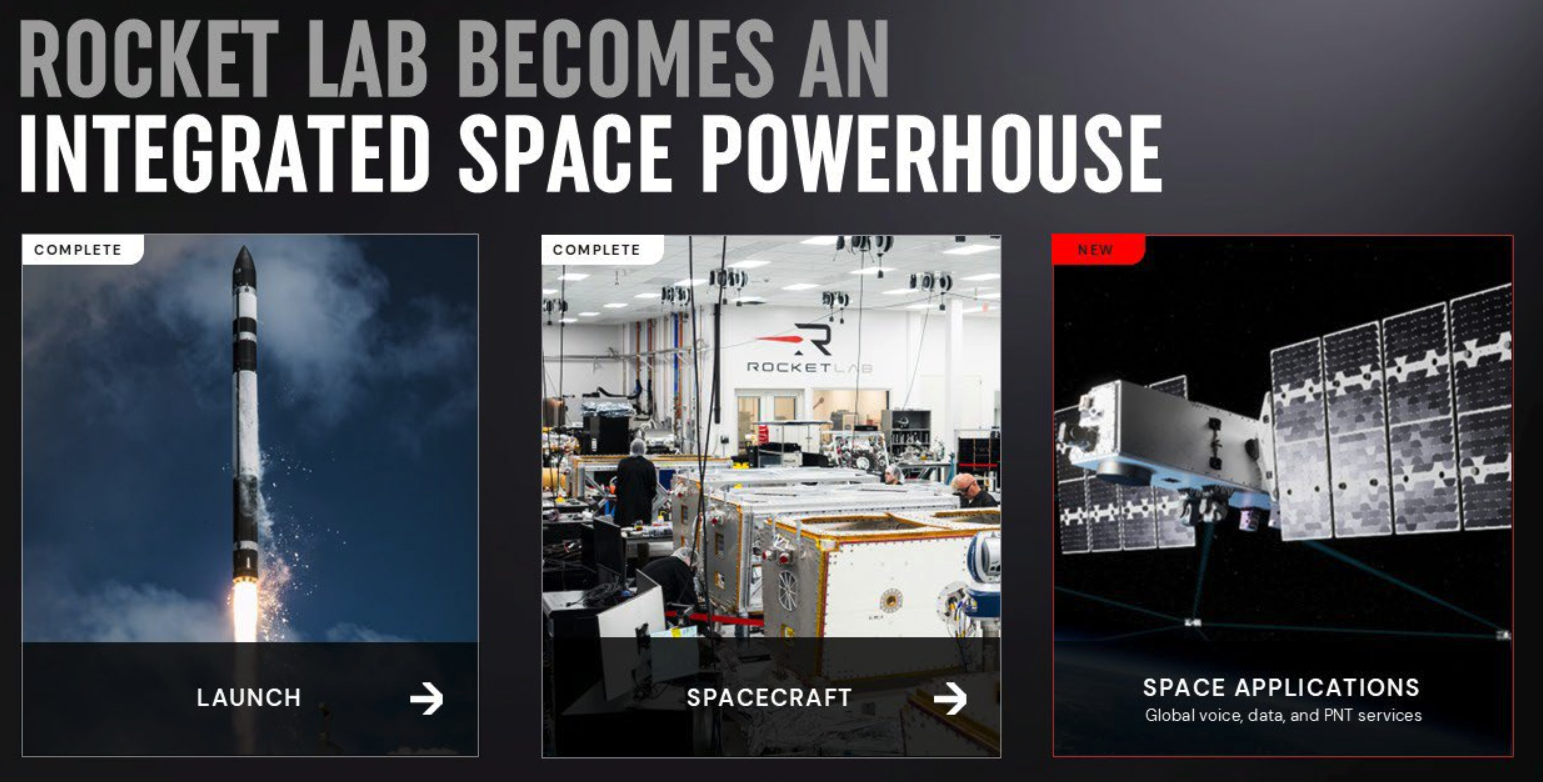
Rocket Lab describes itself as an end to end space company. In practical terms, it wants to remove the friction between designing a space mission and operating it in orbit. While satellites and spacecraft are now the largest part of their revenue base, the company sells across the wider space chain: components, spacecraft, launch, hypersonic testing and mission operations.
The Rocket Lab story began with a simple idea: small payloads sometimes need a dedicated rocket. It has since expanded into the full space stack. From launch to space applications. The latter is the most recent addition to the company via its Iridium acquisition. More on that later.
💡
A payload is the specific cargo, instrument, or equipment carried by a rocket or spacecraft to achieve the primary goal of a mission.
2 - Founding story
Peter Beck founded Rocket Lab in New Zealand in 2006. His idea was not that Rocket Lab would build the largest rocket. It was that certain payloads could value schedule, orbit and mission control enough to pay for a dedicated rocket launch.
His vision is to build an end-to-end space company that acts as a complete "one-stop shop". Rather than focusing solely on launching rockets, he aims to control every part of the spaceflight supply chain.
Rocket Lab reached space with Atea 1 in 2009, announced Electron in 2014 and reached orbit with Electron in January 2018. Today, they have completed 96 successful Electron launches and their new flagship rocket, Neutron, is scheduled for its first flight in late 2026.
If we look at their history, Rocket Lab has used acquisitions and internal engineering to move into satellite components, spacecraft platforms and mission operations, gradually expanding their footprint across the entire stack.

Rocket Lab timeline since founding
- 2006 to 2009 Rocket Lab is founded in Auckland. Atea 1 reaches space in 2009, making Rocket Lab the first private company in the Southern Hemisphere to do so
- 2013 to 2018: The Rutherford engine completes its first hot fire, Electron is announced, Launch Complex 1 is built in Mahia and Electron reaches orbit on its second flight in January 2018.
- 2020 to 2022: Rocket Lab buys Sinclair Interplanetary, Advanced Solutions, Planetary Systems and SolAero. These deals add reaction wheels, star trackers, software, separation systems and solar power. Rocket Lab also enters the public market in 2021 and begins funding Neutron
- 2023 to 2025: Electron begins flying from Virginia, HASTE develops into a suborbital test platform, and Rocket Lab wins larger spacecraft prime contracts. The Geost acquisition adds electro optical and infrared payloads
- 2026 and beyond: Space Systems becomes 81% of Q2 revenue. Rocket Lab adds Mynaric and Motiv, continues Neutron qualification and agrees to acquire Iridium in a transaction expected to close in 2027. The company is no longer a small rocket launch business. It is trying to become a vertically integrated aerospace business with an applications layer on top
3 - What problem does Rocket Lab solve?
I'd like to spend some time on what problem Rocket Lab actually solves for customers because it helps to understand the business.
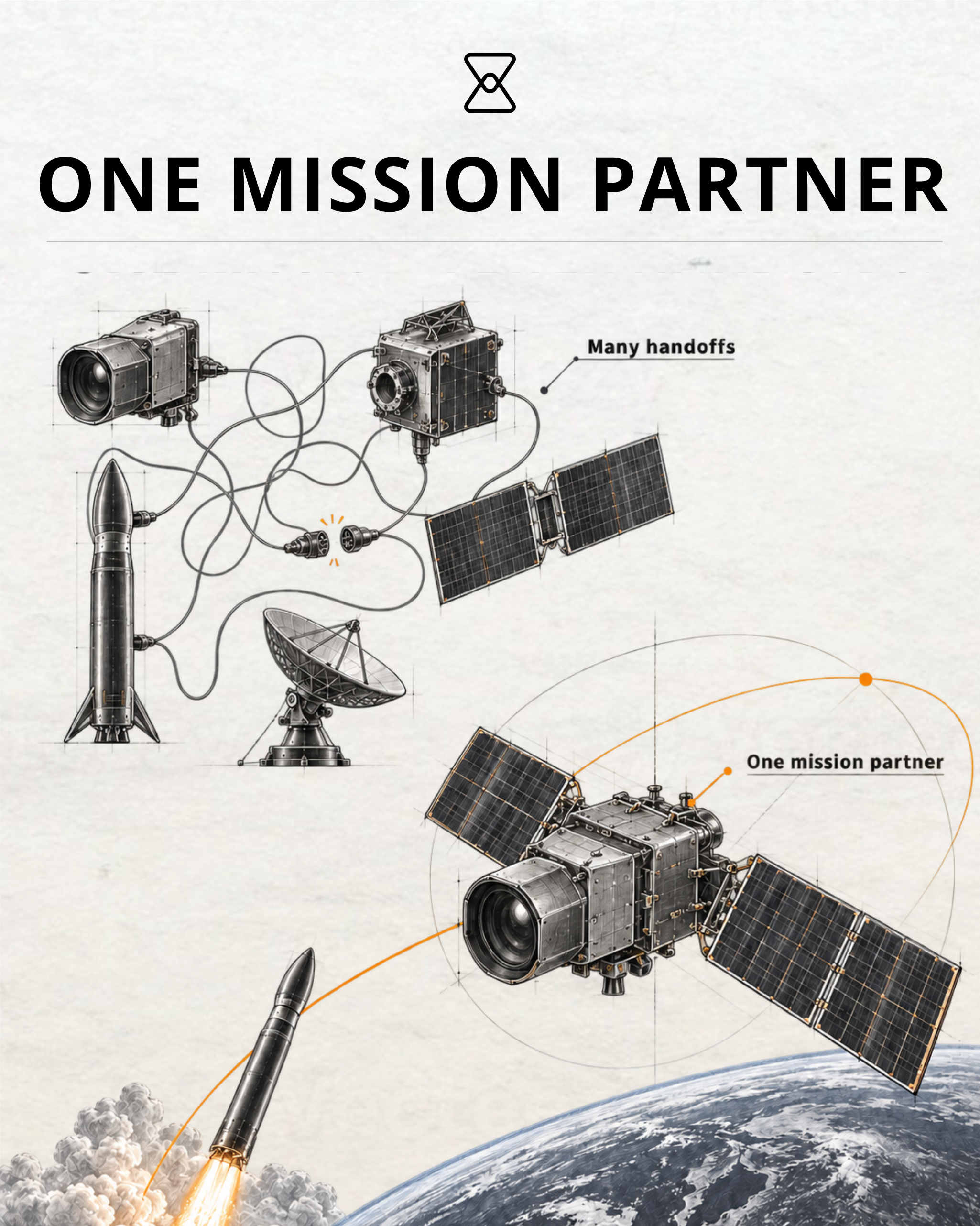
Think of it this way: a satellite has a payload, such as a camera or communications equipment. Around it sits the spacecraft that provides power, keeps it pointed correctly and communicates with the ground. The customer then needs a launch to the right orbit and people who can operate the mission. Rocket Lab is the mission partner where you can go to.
Why integration is important
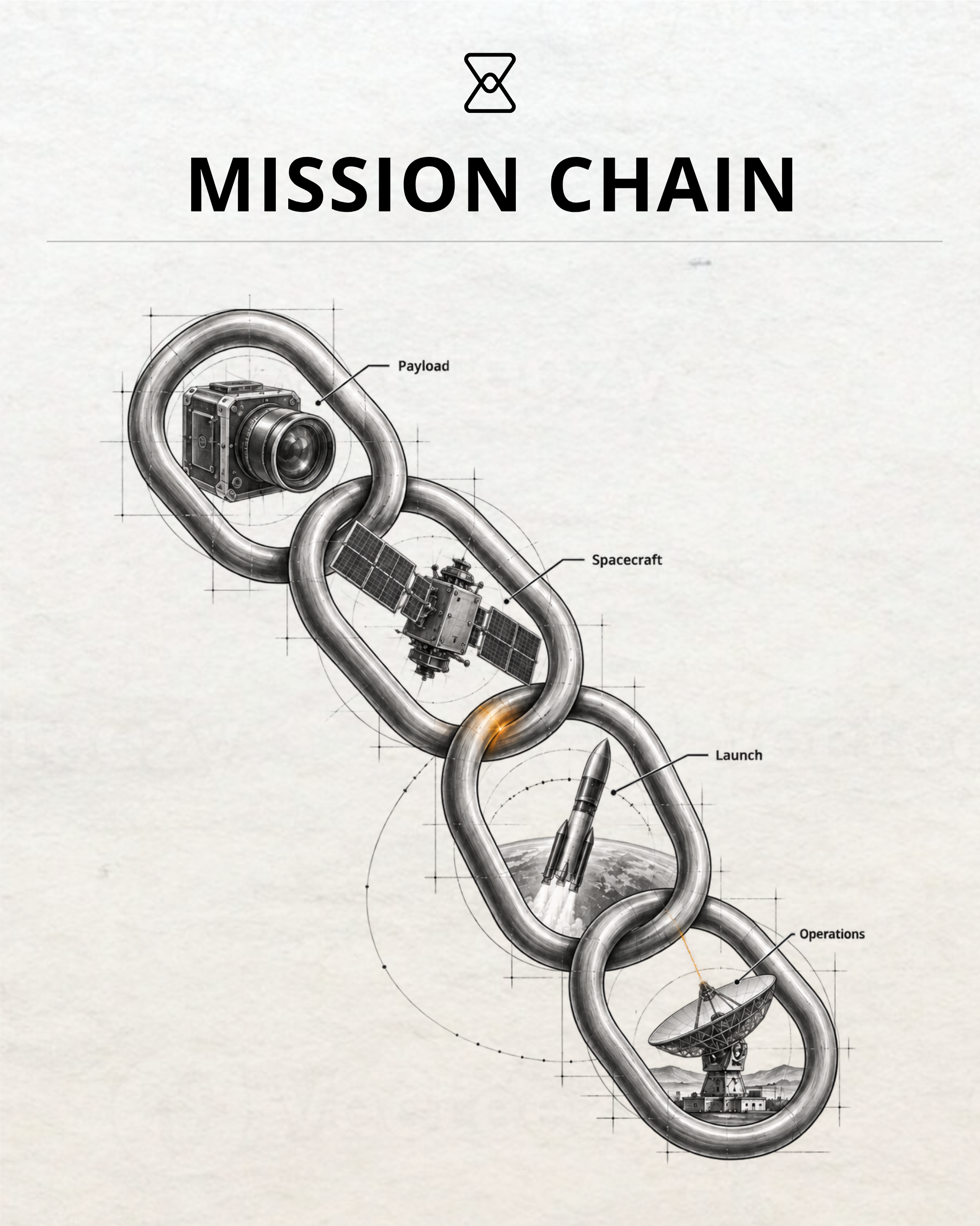
You can view a satellite mission as a chain. The payload carries the actual cargo, the spacecraft provides power and control, the launch places it in the correct orbit and mission operations keep it functioning. One weak link can delay or destroy the value of everything around it.
Rocket Lab's strategy is to own every part of that chain. Think of it like a house renovation. Hiring the cheapest electrician, plumber and carpenter may reduce each quoted price. But it can also leave the owner managing everyone separately. A capable main contractor costs more, but one party becomes responsible for the finished result.
Rocket Lab wants to become that contractor for space missions.
4 - Rocket Lab versus SpaceX
When looking into Rocket Lab, I wondered how Rocket Lab could survive alongside SpaceX and how they actually compare to one another. The main answer to that question is that they target different customers and use cases. Rocket Lab is the specialist whereas SpaceX is the generalist.
| Dimension | Rocket Lab | SpaceX |
|---|---|---|
| Core customer problem | A customer needs a tailored mission, dedicated access to a specific orbit, or a single supplier across spacecraft and launch. | A customer needs low cost access to orbit at enormous scale, or broadband connectivity through Starlink. |
| Launch proposition | Electron competes on control, schedule, orbital precision and dedicated missions. | Falcon 9 rideshare competes primarily on scale and low cost per kg. |
| Typical use case | A satellite operator needs a particular orbital plane or launch timing and cannot wait for a shared mission. | A constellation operator can accept SpaceX's schedule, orbit and shared mission setup in exchange for a lower cost. |
| Spacecraft capability | Rocket Lab can supply components, satellite buses, payloads, launch and operations, even when another company launches the spacecraft. | SpaceX largely uses its industrial system to support Starlink, alongside its external launch customers. |
| Strategic position | An emerging end to end aerospace prime that sells flexibility, integration and mission control. | The mature scale leader, with far greater reusable launch cadence and a large connectivity business. |
| Economic tradeoff | Higher mission control can be worth more than a lower ticket price. | Lowest launch cost can be decisive when scheduling and orbit are flexible. |
When we look at what both offer in terms of rockets and payload:
| Company | Rocket | Use and payload | Reusability |
|---|---|---|---|
| Rocket Lab | Electron |
Dedicated small satellite launch. Up to 300 kg to LEO. |
Primarily expendable. Recovery and reuse remain in development. |
| Rocket Lab | HASTE |
Suborbital and hypersonic testing. Up to 700 kg suborbital. |
Expendable. |
| Rocket Lab | Neutron |
Constellations and medium lift missions. 8,500 to 15,000 kg to LEO. |
Reusable first stage and captive fairing. Expendable second stage. |
| SpaceX | Falcon 9 |
Satellites, rideshare, cargo and crew. Up to 22,800 kg to LEO. |
Routinely reused first stage. Expendable second stage. |
| SpaceX | Falcon Heavy |
Heavy satellites and deep space. Up to 63,800 kg to LEO. |
Recoverable booster cores. Expendable second stage. |
| SpaceX | Starship |
Super heavy cargo, Moon and Mars. More than 100,000 kg to orbit. |
Designed for full reuse of both stages. |
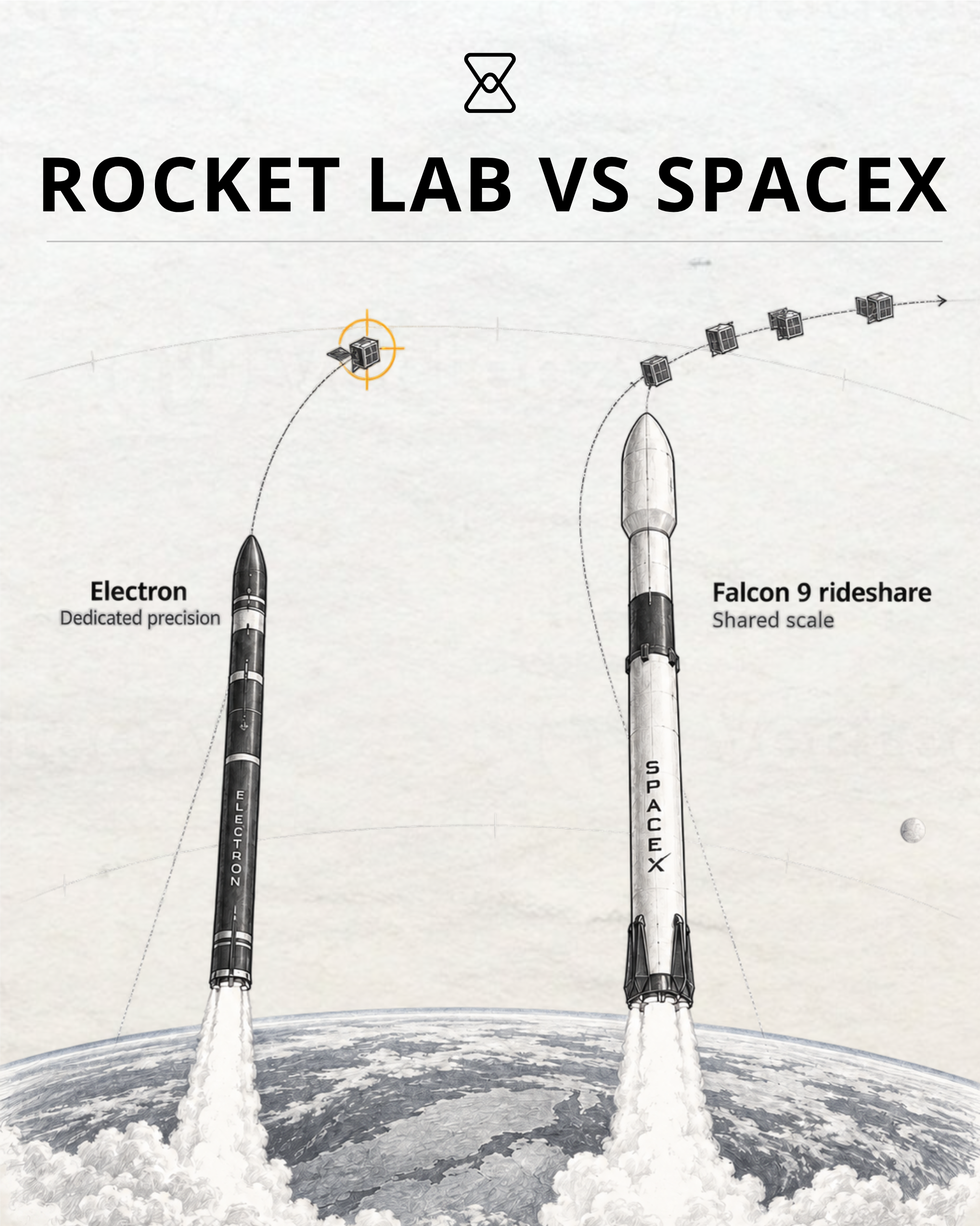
SpaceX primarily sells scale and cost efficiency, while Rocket Lab sells specialized mission control and integration.
5 - Product portfolio
Rocket Lab reports two segments, Launch Services and Space Systems. Within those segments there are several different focus areas. Let's walk through each of them.
Launch services
Rocket Lab's Launch Services segment covers the design, manufacturing and operation of orbital and suborbital rockets. It currently includes Electron and HASTE, with Neutron under development as the company's move into medium lift (2,000-20,000 KG) launch.
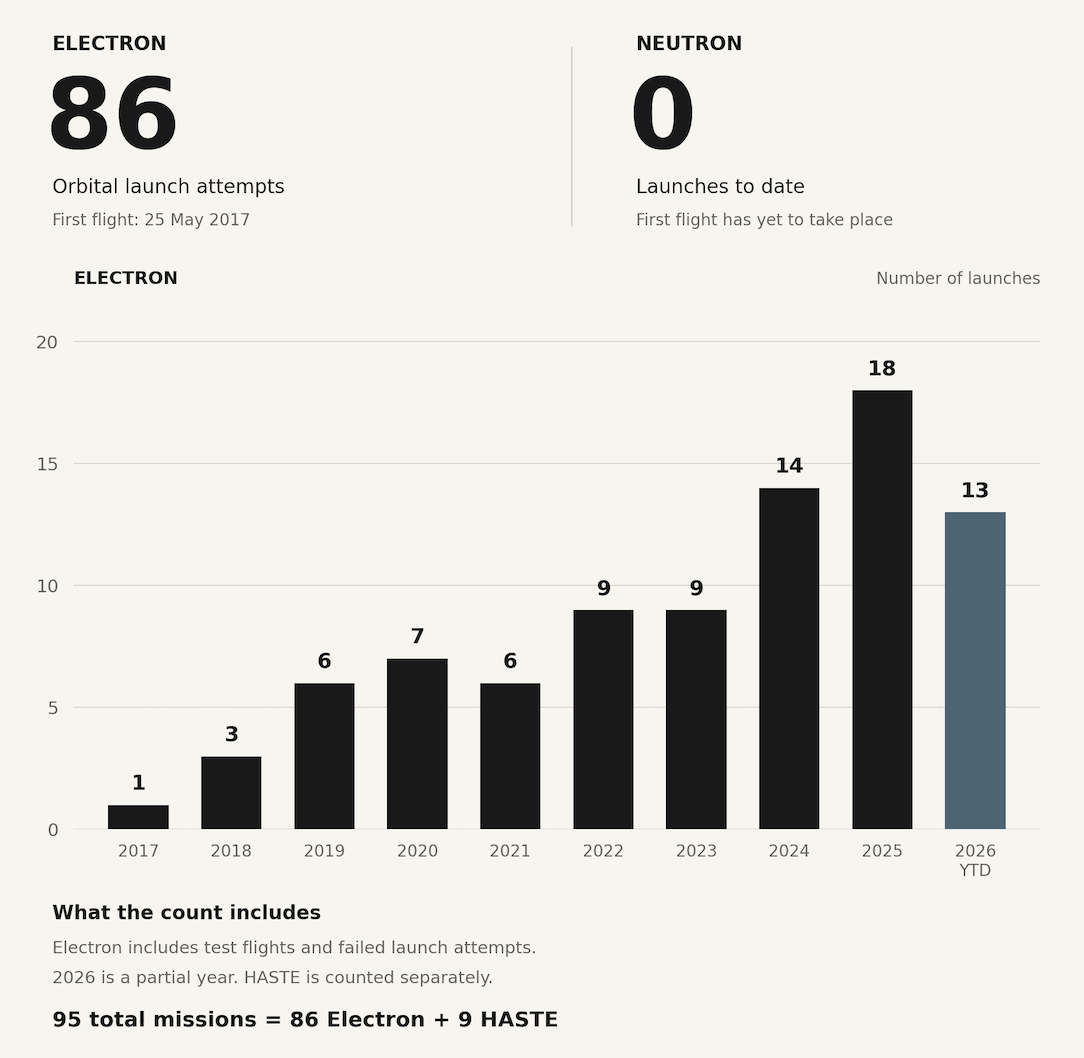
5.1 - Electron
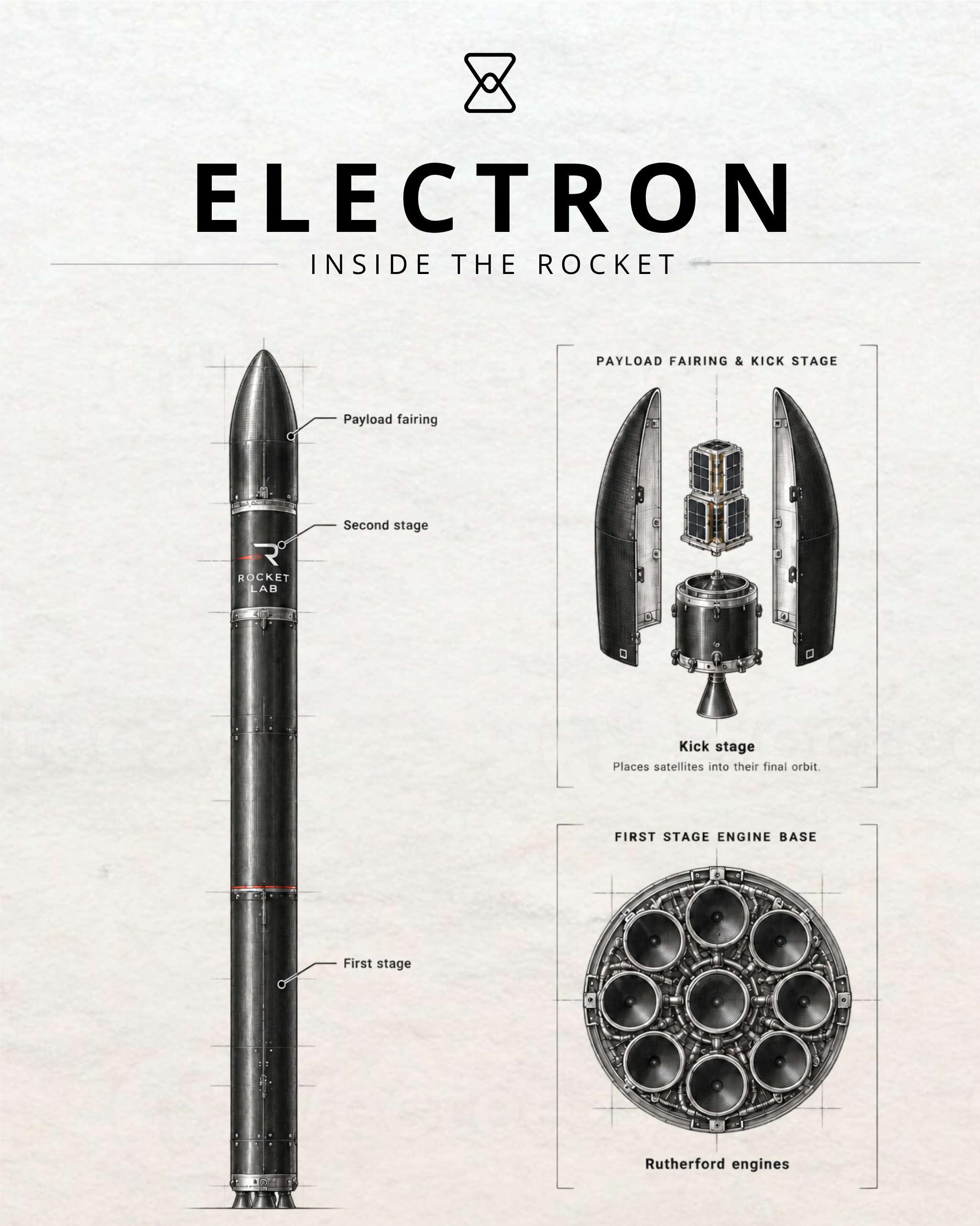
Electron is the workhorse of Rocket Lab with a proven track record for small payloads. It carries up to 300 kg to low Earth orbit and competes on dedicated access, schedule and orbital precision rather than the lowest price per kilogram.
5.2 - HASTE
HASTE (short for 'hypersonic accelerator suborbital test electron') is Rocket Lab's suborbital launch vehicle. It uses technology derived from Electron, but it serves different customer needs. Instead of placing satellites into orbit, HASTE supports hypersonic testing, missile defense programs and other missions that require high speed flight through the atmosphere.
5.3 - Neutron
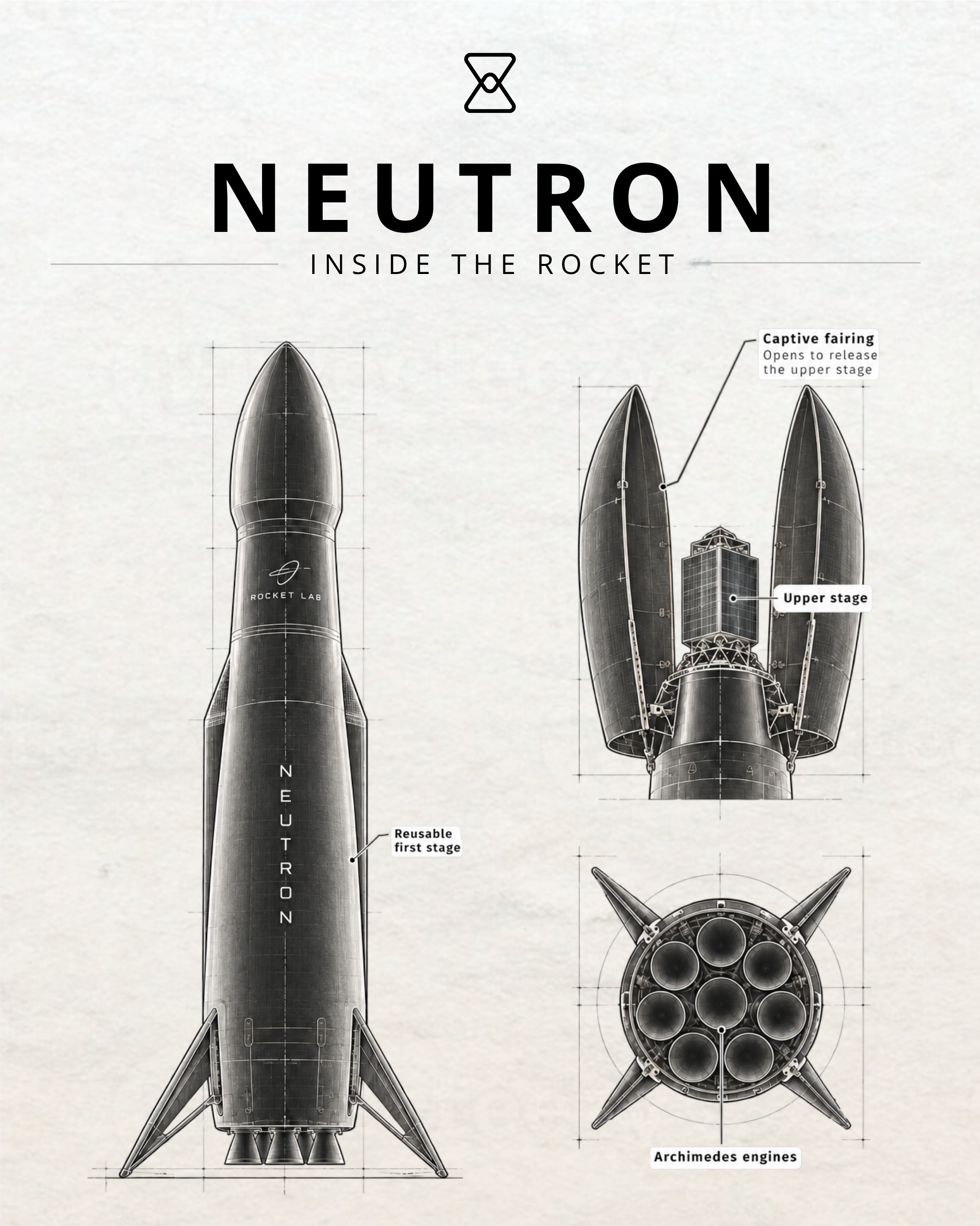
Neutron is Rocket Lab's reusable medium lift (2,000 - 20,000 KG) rocket under development, with its debut flight scheduled for late 2026. It is designed to carry up to 13,000 kg to low Earth orbit in its reusable configuration, opening a much larger market than Electron can address.
Potential missions include constellation deployment, national security launches, commercial spacecraft and future internal launches for a Rocket Lab owned satellite network.
Are they reusable?
Rocket Lab's current workhorse rocket, Electron, is primarily expendable. But the company is actively developing reusability and designing its upcoming Neutron rocket to be partially reusable.
Space applications
Space applications is currently the main driver of revenue for Rocket Lab, with roughly 60% of their revenue coming from it.
You can picture space applications as a way to turn spacecraft infrastructure into services and data that customers use on Earth. Instead of only building and launching satellites, Rocket Lab owns and operates them to create recurring revenue from communications, navigation, Earth observation or other applications.
The Iridium acquisition adds a layer that Rocket Lab does not currently own at scale: recurring revenue from services delivered through a satellite network. This is strategically very attractive because Rocket Lab could eventually build and launch replacement satellites internally. Those internal launches would reduce consolidated costs rather than create external revenue.
Below is a detailed breakdown of their space application segments in case you want to dive in deeper.
Interestingly, these segments allow Rocket Lab to generate revenue without launching a rocket themselves.
Detailed breakdown of all segments
Space solar
Rocket Lab supplies solar cells, panels and arrays that generate power in orbit. A satellite payload cannot function without dependable power, making solar capability a critical part of Rocket Lab’s ability to provide more of an entire spacecraft internally.
Satellite components
Rocket Lab supplies reaction wheels and star trackers that control pointing and orientation. Imaging, communications and navigation all depend on knowing exactly where a spacecraft is pointed and keeping it stable throughout the mission.
Separation systems
Rocket Lab provides separation systems and mechanisms that release or move spacecraft and payloads. These are small but mission critical components because deployment must work correctly, often without any possibility of repair.
Flight software and avionics
Rocket Lab sells flight software, radios and avionics that control the spacecraft and keep it connected with the ground. Hardware only becomes a functioning satellite when these systems work together, and reusable software can reduce engineering time on future missions.
Optical communications
Rocket Lab develops laser communication terminals that move data between spacecraft. These links allow a constellation to transfer data in orbit without every satellite needing a direct connection to a ground station, improving resilience and reducing ground infrastructure needs.
Payload systems
RocketLab provides electro optical and infrared payload capability. This is the equipment that performs the useful work customers ultimately pay for, including imaging, tracking, surveillance and missile warning.
Spacecraft and mission operations
RocketLab can provide spacecraft platforms, integration and mission operations. This lets one company take responsibility for more of the mission, reducing handoffs between components, spacecraft, launch and operations.
6 - Iridium acquisition
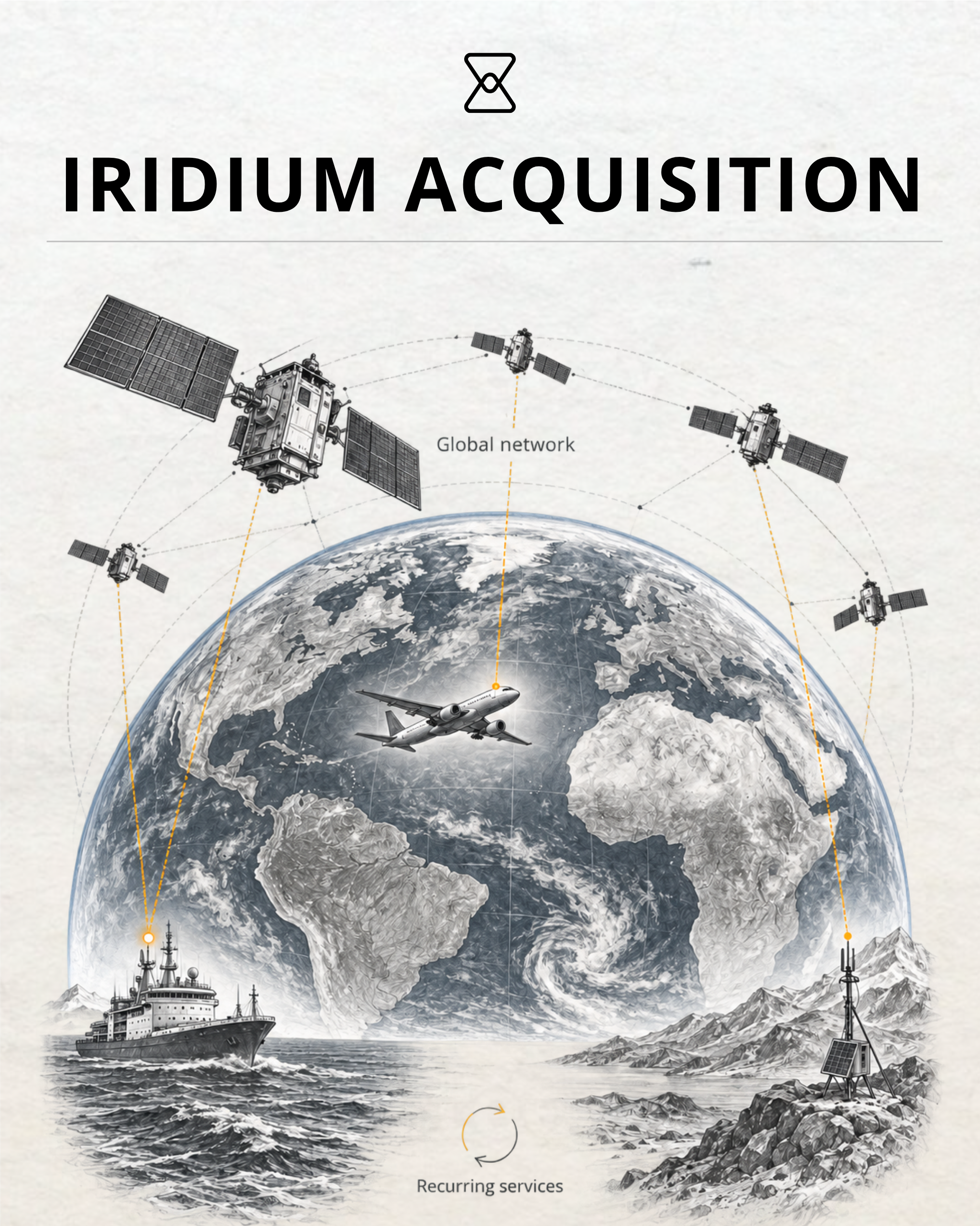
Rocket Lab agreed to acquire Iridium in a cash and stock transaction of approximately $8B, which is expected to close in 2027. The deal would add a global communications network, customer relationships, licensed spectrum access and recurring service revenue.
I'd like to spend some more time on this as it's the largest acquisition Rocket Lab has ever done.
What iridium does
Iridium operates a global communications network with 66 operational satellites plus spares. Its "L band services" connect ships, aircraft, government users and equipment in places where terrestrial networks cannot reliably reach.
Rocket Lab already builds components, spacecraft and rockets. Iridium adds the network, spectrum access and paying customers using that infrastructure. In a sense, it's following the same playbook as SpaceX with Starlink.
Fundamentals
In 2025, Iridium generated $871M in revenue and approximately $300M in free cash flow. That cash generation is particularly attractive for Rocket Lab, which is still investing heavily ahead of future revenue.
7 - All acquisitions
When looking back at Rocket Lab's acquisition history, it's clear how they gradually built toward a full stack space company. It does also come with risks as Rocket Lab might become overly reliant on acquisitions to stay competitive and acquisitions always care potential integration issues.
So far, they've however done an excellent job with their acquisitions.
| Acquisition or asset purchase | Date | Capability added |
|---|---|---|
| Sinclair | 2020 | Reaction wheels and star trackers |
| Advanced Solutions and Planetary Systems | 2021 | Flight software, engineering and separation hardware |
| SolAero | 2022 | Space solar cells and power products |
| Virgin Orbit assets | 2023 | Selected manufacturing equipment and facilities |
| Geost | 2025 | Sensing payloads |
| Optical Support and Precision Components | Early 2026 | Precision optical and manufacturing capabilities |
| Mynaric | April 2026 | Laser communications terminals |
| Motiv | May 2026 | Mechanisms, solar array drives and robotics |
| Iridium | Proposed | Communications services, spectrum access and a customer network, now including Aireon |
8 - Moat
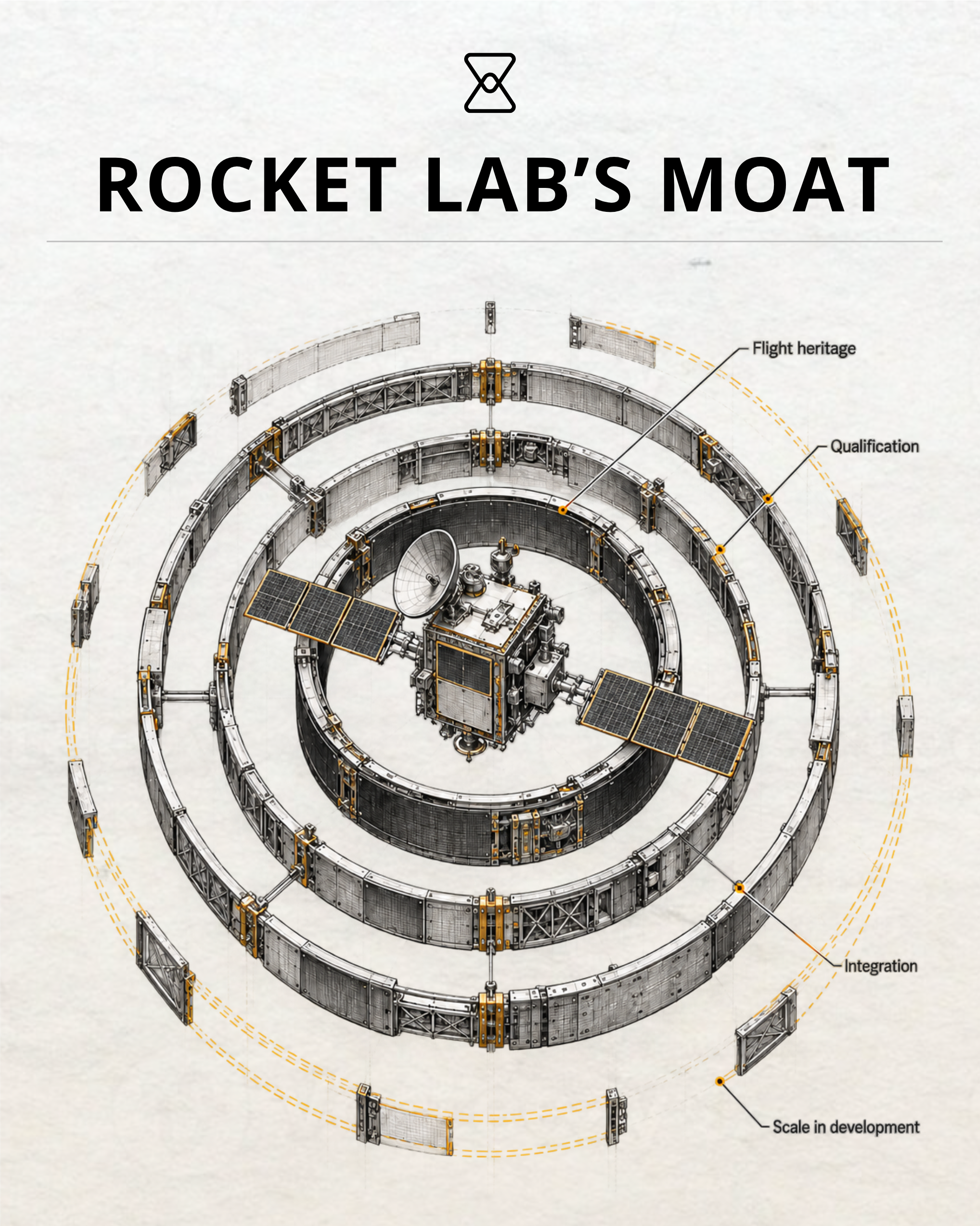
This is a particularly important part of this deep dive because the moat is what helps them stay competitive versus a behemoth like SpaceX. This is how I would rank Rocket Lab's moat sources from strongest to weakest:
8.1 - Flight history and trust (high)
Space hardware gets one chance to work. Components have to survive launch vibration, vacuum, radiation and temperature changes, often with no repair option. A part that has already flown successfully carries evidence that it's up to the task. Rocket Lab's excellent operating record adds to that trust and showcases the quality they deliver.
8.2 - Qualification and switching costs (medium to high)
Replacing a qualified component can mean engineering work, new tests and schedule risk. A small saving on a reaction wheel or separation system is a poor bargain if it delays a much more valuable spacecraft. This supports repeat design wins, although government customers are deliberately pursuing common interfaces to preserve competition.
8.3 - Vertical integration (medium)
Owning components, spacecraft platforms, payloads, launch and mission operations makes switching costs higher and creates a one stop shop for customers. This is the part of the moat that's widening materially when the Iridium deal closes. It allows Rocket Lab to serve the full stack if required by a customer and gives it full control over the entire value chain.
8.4 - Scale and cost (developing)
Electron's reported launch economics have improved, and new factories create capacity for more spacecraft components. It's not yet a structural cost advantage, but they are moving in that direction. SpaceX has far greater launch cadence and reuse experience right now and Rocket Lab still has to prove that Neutron can recover, reflight and spread fixed costs over several missions.
So far, we have established that Rocket Lab is becoming much more than a rocket company. It is gradually building a full space stack with launch, spacecraft, components and potentially communications on top.
But a great business can still be a bad investment if you pay too much.
So it's time to dive into the numbers, valuation, risks and whether I would personally buy Rocket Lab at today’s price.
This post is for subscribers only
Subscribe to continue reading
Written by