
Ouster Q2 2026 recap: The foundation for Physical AI
Introduction
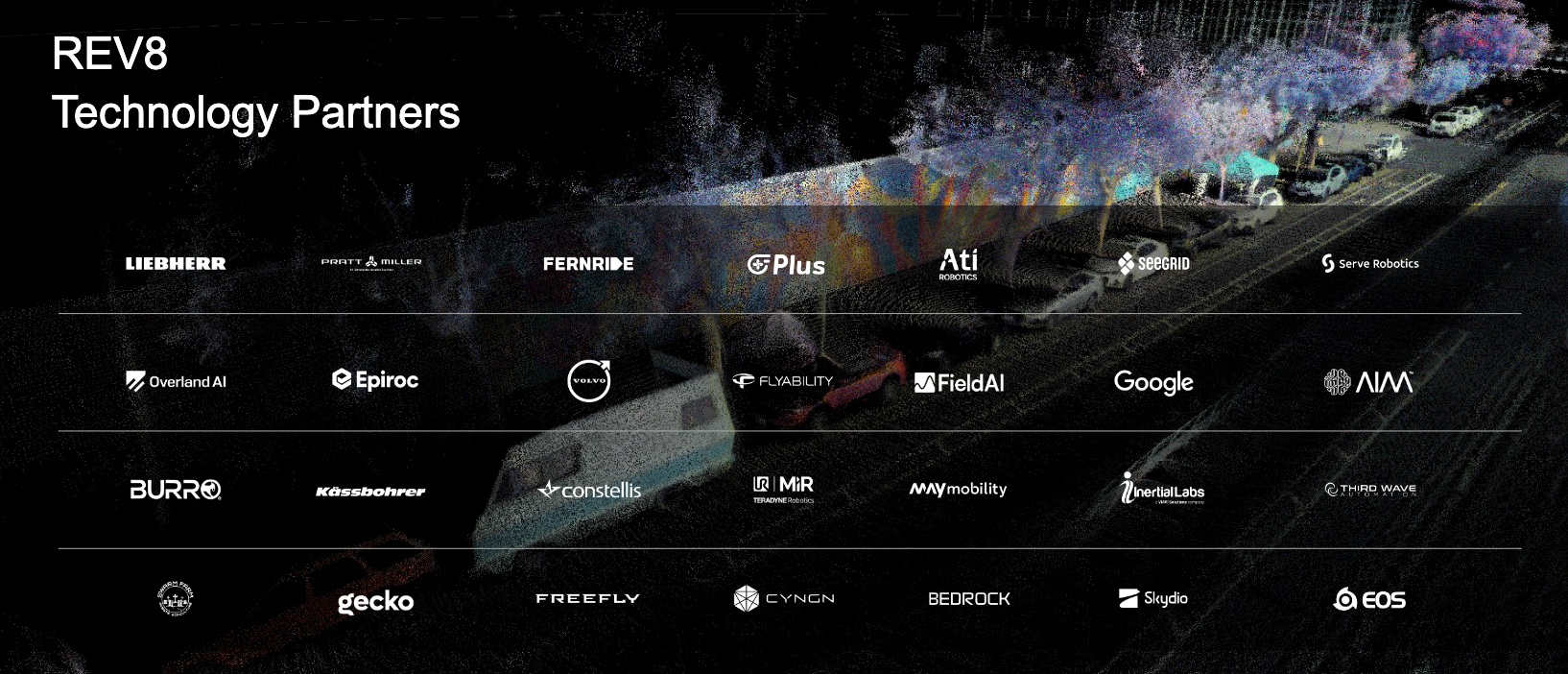
Ouster reported Q2 earnings on August 6, marking the first quarter in which it shipped the Rev8 native-color lidar sensor. CEO and co-founder Angus Pacala on the Rev8:
'The launch of Rev8 was the most important product release in Ouster's history and a pivotal moment for Physical AI." He described it as delivering "the holy grail for 3D spatial perception".
Pacala on customer reactions, he said it "blew away my expectations," and "we have almost universal adoption of native color in the Rev8 customer set" and that customer feedback has been "electric," with buyers calling it "a massive leap in sensing capability."
It's great to see how well the Rev8 has been received. It seems like there's much more to come in the quarters ahead, and this is an important step toward a large-scale ramp. But before I dive into the numbers: what exactly does OUST do?
1 - What Ouster does
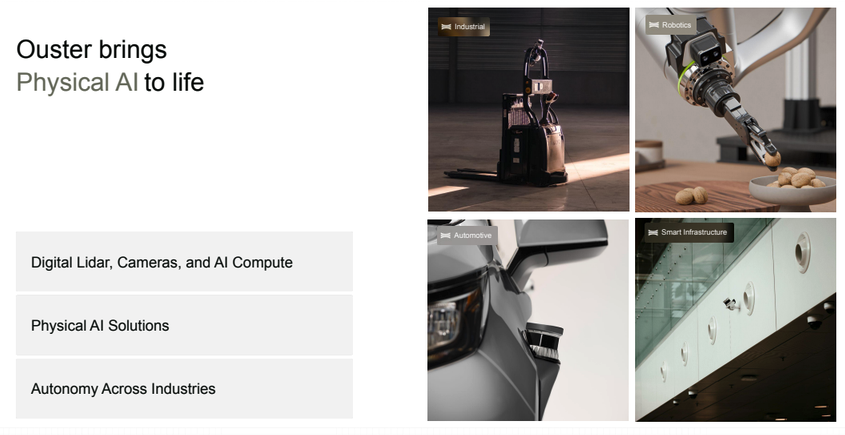
In simple terms, Ouster builds the sensors that let machines "see" and understand the physical world: lidar units that map depth and distance. Since the Stereolabs acquisition, stereo cameras add visual detail on top of that.
The company calls this combination the foundation for Physical AI: robots, self-driving vehicles, smart traffic systems, and industrial automation, all of which need some way to perceive their surroundings before they can act.
Ouster sells hardware directly to the companies building these systems, from warehouse robotics developers to state transportation departments to humanoid robot makers, and increasingly layers software on top through products like BlueCity for traffic management.
1 - Key numbers
- Revenue: $55 million, up 56% year over year, up 12% sequentially, the 14th consecutive quarter of growth
- Product revenue: $53 million, up 51% year over year
- Sensors shipped: over 17,000 units, a quarterly record, roughly 53% lidar and the rest camera
- GAAP gross margin: 49%, up 400 basis points year over year
- Non-GAAP gross margin: 53%, up 200 basis points year over year
- GAAP net loss: $18 million, an improvement of $2 million year over year
- Adjusted EBITDA loss: $4 million, an improvement of $1 million year over year
- Cash, restricted cash, and short-term investments: $263 million as of quarter end
- Lidar unit volume growth: up 70% year over year

2 - Outlook
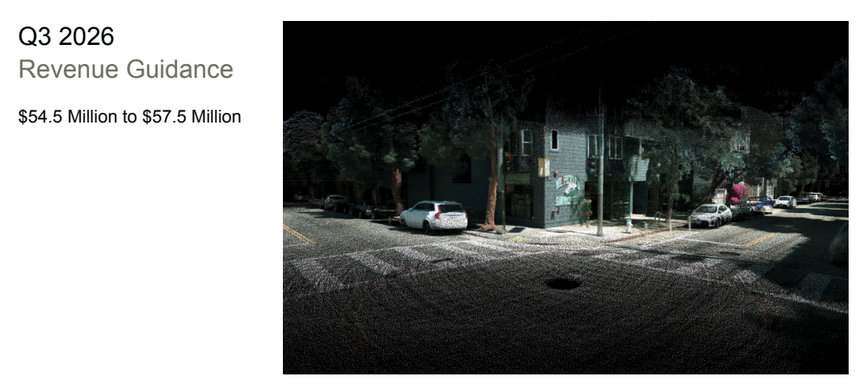
- Q3 2026 revenue guided to $54.5 million to $57.5 million
- Full year revenue expectations unchanged
- Q3 operating expenses expected up 5% to 8% year over year
- Gross margin expected to normalize back into the 35% to 40% range as one-time benefits roll off, with potential upside as software mix grows
CFO Ken Gianella on Rev8 ramp: "production volumes expected to occur throughout and into the latter part of the third quarter". Pacala also added a more long-term view to that: 'This will be a two-year transition, is my expectation for the entire customer base".
CFO Ken Gianella about this quarter's gross margin (49% GAAP); this included a one-time cost of goods refund worth roughly 1,000 basis points, and the company doesn't expect that kind of benefit to repeat. If we strip that out, margins are closer to the high 30s, which is still very healthy for a young hardware company.
3 - Business highlights
Rev8 ramp
I'd like to spend a little more time on the Rev8 given its importance in the years ahead. It's the first lidar sensor on the market that captures native color alongside depth data without needing a separate camera.
Pacala said multiple Fortune 500 companies, including the world's largest heavy machinery manufacturer and a top autonomous vehicle provider, placed $1 million orders within roughly a quarter of the product becoming available. That's really impressive.
The key question is whether Ouster can meet the demand. On the call, management noted it expanded its manufacturing partnership with Benchmark Electronics to support production beyond 100,000 lidar units a year, up from a run rate under 40,000 today.
Lidar unit volumes were already up 70% year over year heading into this ramp, so growing that by another 2.5x shows how much demand there is.
Steriolabs
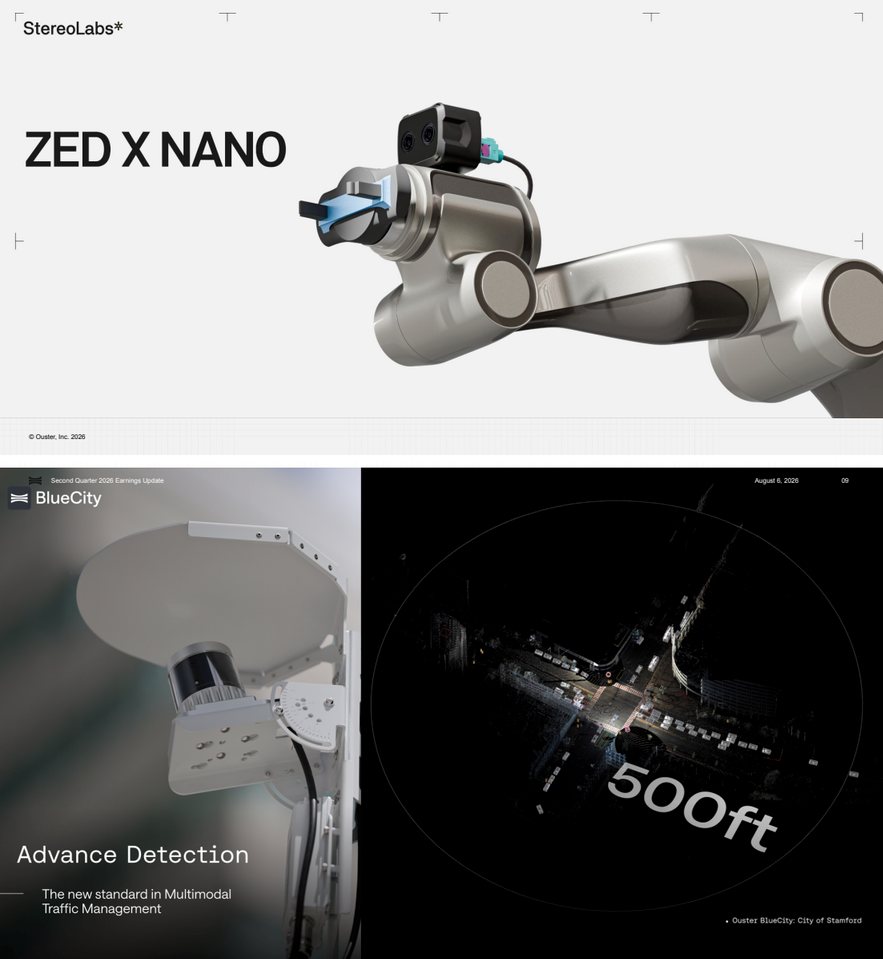
Then there's Stereolabs, which is particularly interesting when talking about humanoid robotics. The ZED X Nano, a small wrist-mounted stereo camera built for robotic arms, was described as "the most successful launch in Stereolabs' history."
Pacala noted that humanoid robot platforms typically carry 6 to 12 cameras each, but only a handful carry lidar. So in this segment, cameras will likely be the fastest-growing part of the business.
I also found the cross-selling interesting: existing Stereolabs industrial customers asking to buy lidar from Ouster directly, and existing Ouster lidar customers asking whether they can now buy cameras too. That's real synergy.
BlueCity
On the smart infrastructure side, BlueCity, which is Ouster's traffic monitoring software, got a great stress test across 42 highway locations in New Jersey and 30 intersections in Atlanta, tied to World Cup traffic monitoring.
Management pointed to Utah as the clearest proof of the "land and expand" strategy: customers pilot the product, see it perform, and expand to city or statewide deployments. Utah is now the largest lidar-based traffic deployment in the country. With roughly 300,000 intersections in North America and only a few thousand currently covered by Ouster's systems, there's a long runway here.
4 - Management commentary
Asked whether competitors could catch up, Pacala pointed to durability: "I don't see anyone just kind of jumping into the mix and being able to build what Ouster has built in a year or a couple of years," citing 11 years of consistent investment as the moat.
This post is for subscribers only
Subscribe to continue reading
Written by