

members only
MercadoLibre Q2 2026: the flywheel that continues to turn

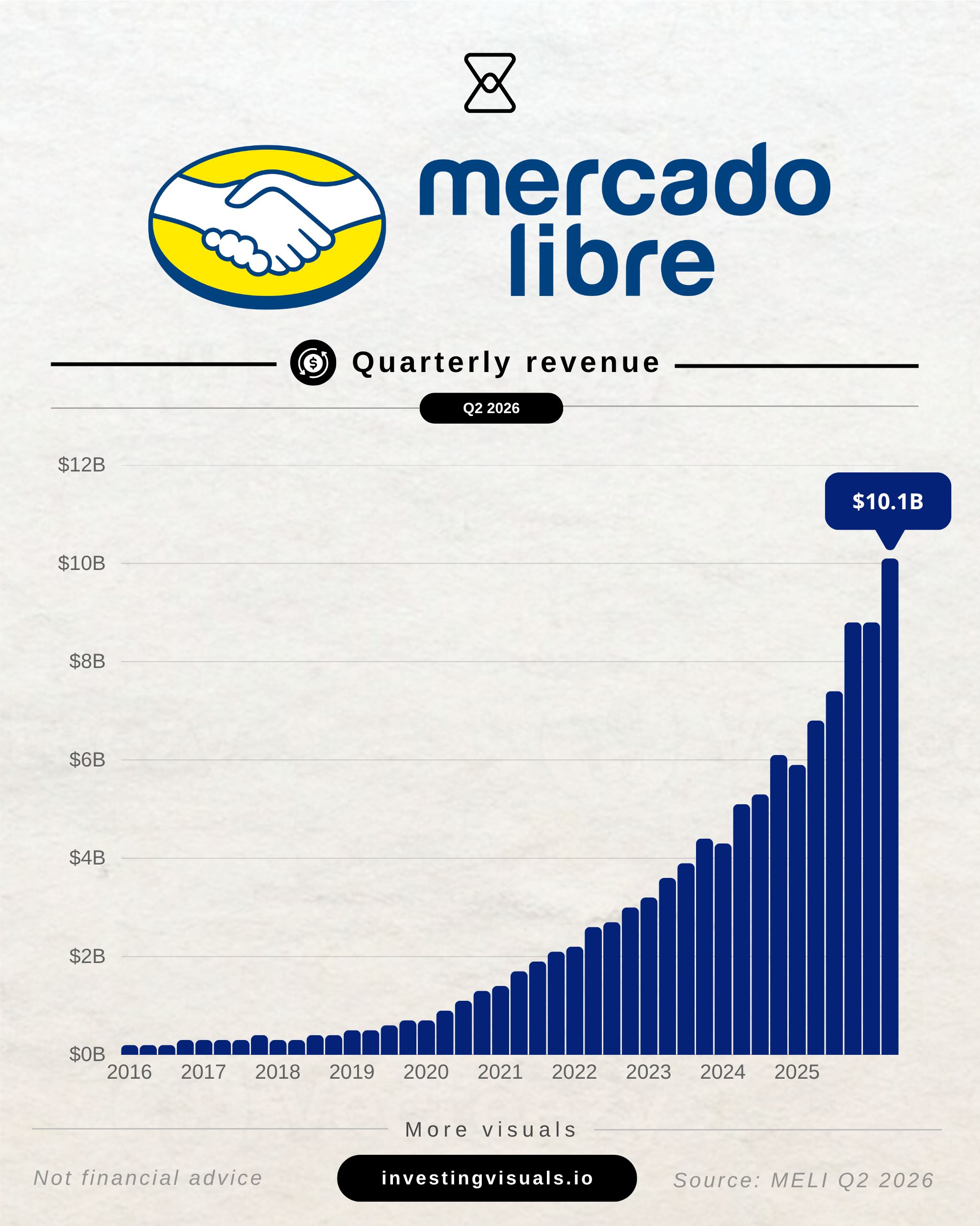
In Q2, MercadoLibre's revenue crossed $10 billion for the first time, up 50% year on year. It's the only company I know of that's been able to post 30 consecutive quarters of >30% revenue growth. It can't be overstated what a spectacular achievement that is.
In this recap, I'll cover the most important nuggets of Q2, from the key metrics and growth numbers to business highlights, management commentary, and my own take on the quarter.
1 - What MercadoLibre does
MercadoLibre is the largest e-commerce and fintech platform across Latin America, running a marketplace where buyers and sellers transact, alongside Mercado Pago, which is its payments and financial services arm that now includes a fast growing credit portfolio, a digital wallet, and asset management products.
It's a self reinforcing flywheel: buyers who shop and pay through Mercado Pago tend to spend more on the marketplace, and merchants who use Mercado Pago to accept payments become more embedded in the ecosystem. The company calls the users who touch both sides ecosystemic users.
2 - Key numbers
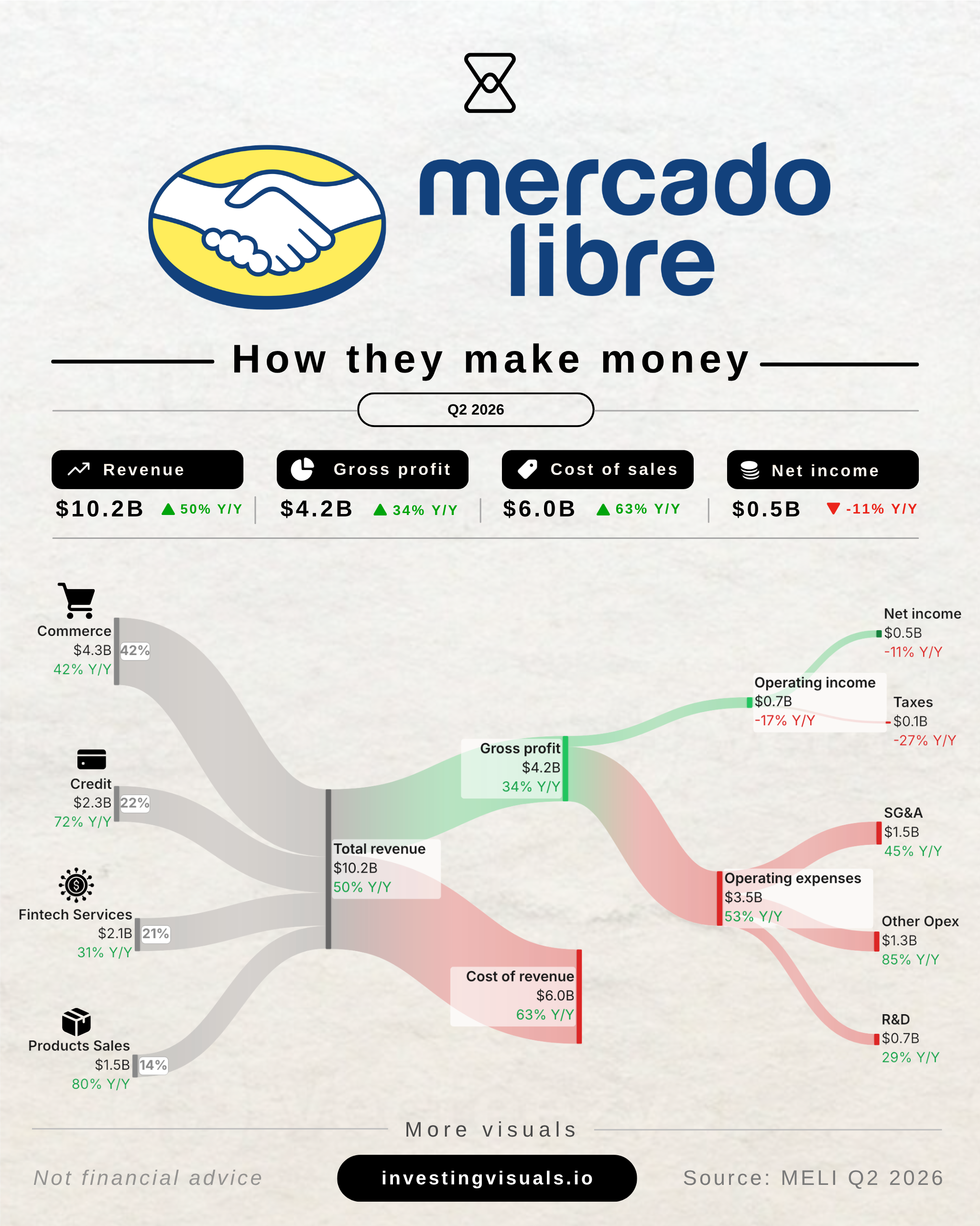
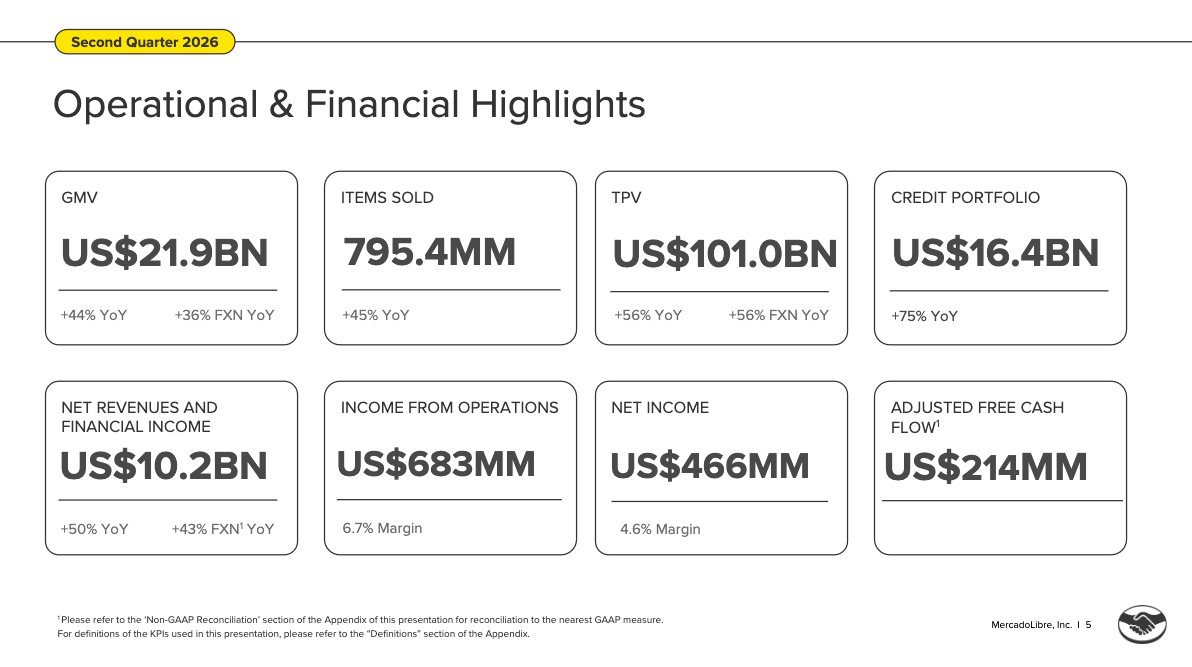
- Net revenue and financial income: $10.2 billion, up 50% YoY
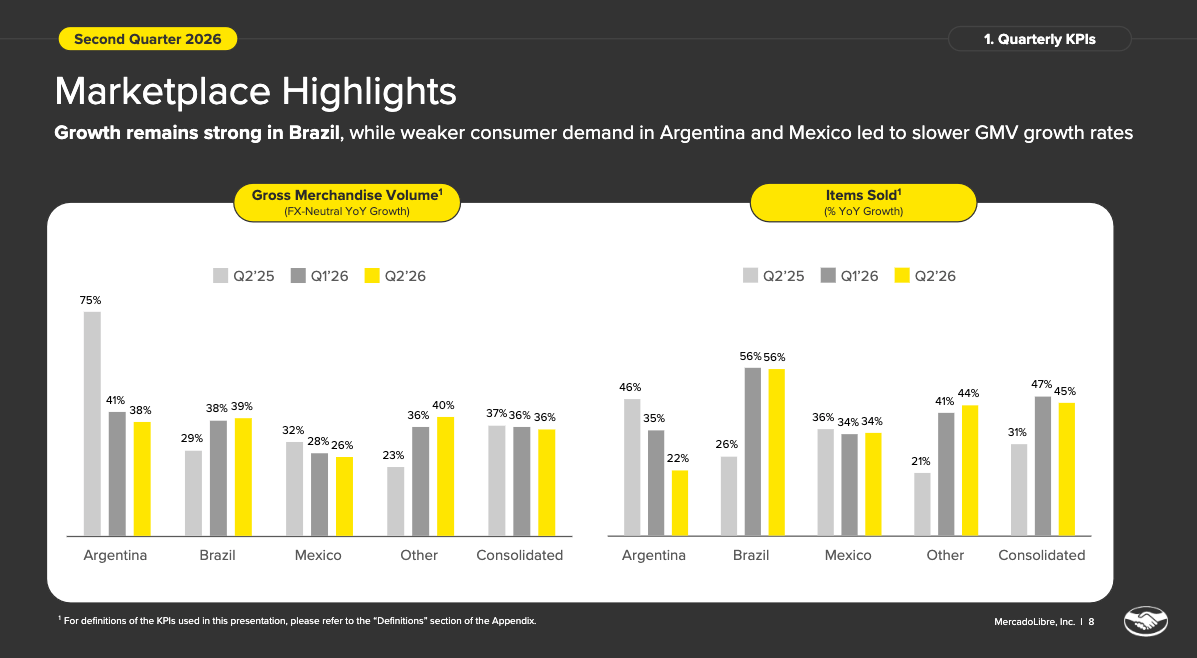
- Gross merchandise volume (GMV): $10.1 billion, up 56% YoY
- Items sold: 795.4 million, up 45% YoY
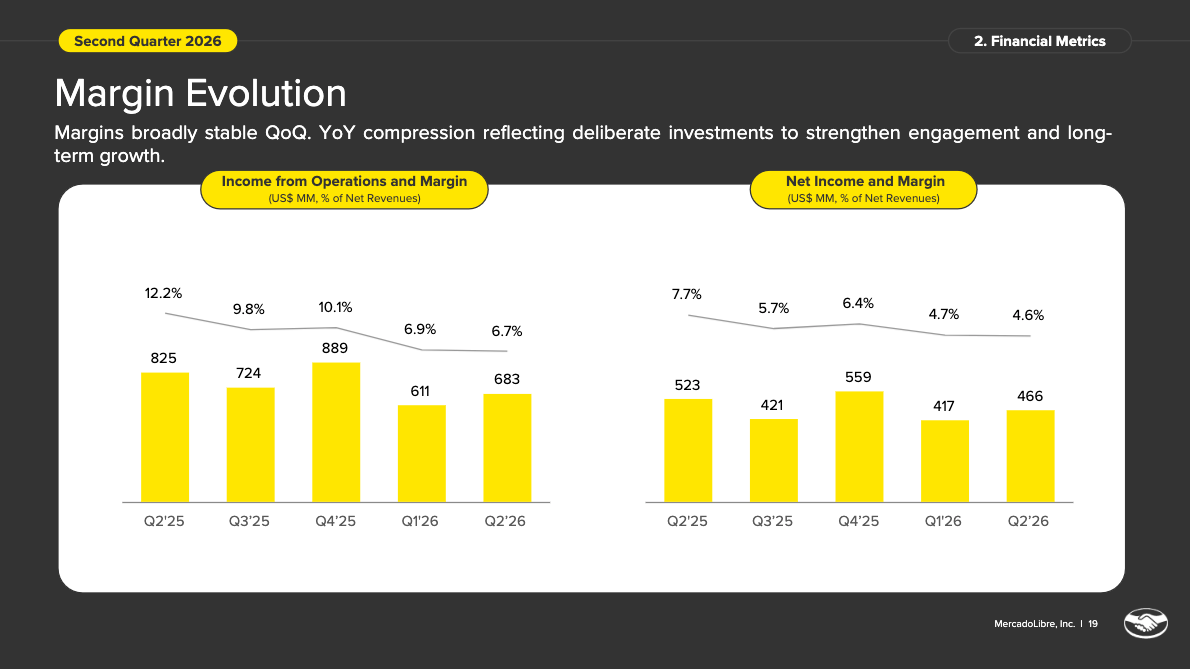
- Income from operations: $683 million, a 6.7% margin, down from 11.7% YoY (more on this later in the recap)
- Net income: $466 million, a 4.6% margin, down from 7.6% YoY
- Adjusted free cash flow: $214 million
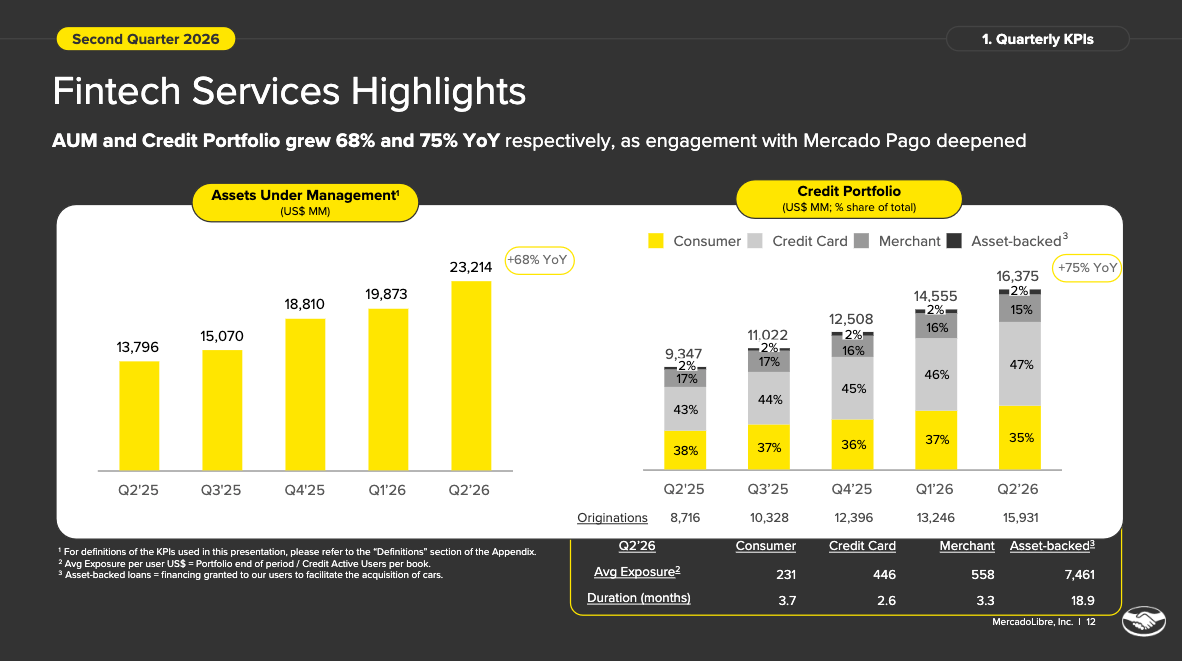
- Credit portfolio: $16.4 billion, up 75% YoY
- Assets under management: $21.9 billion, up 44% YoY
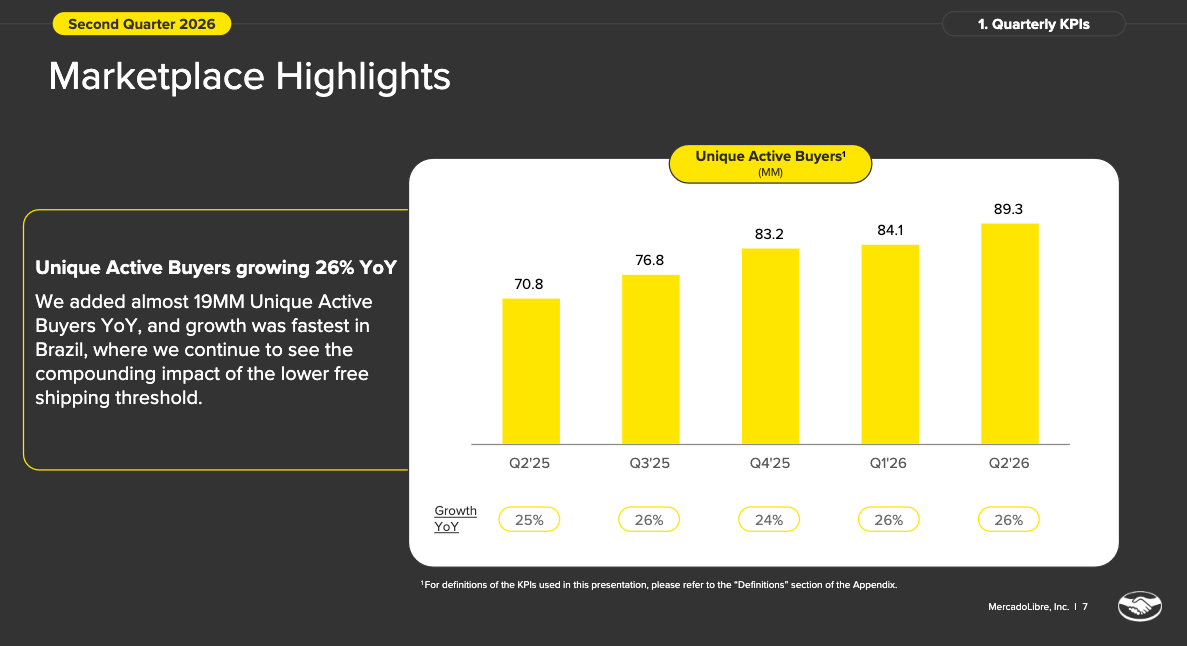
- Unique active buyers: growing 26% YoY, adding almost 19 million buyers
- Fintech monthly active users: growing 30% YoY
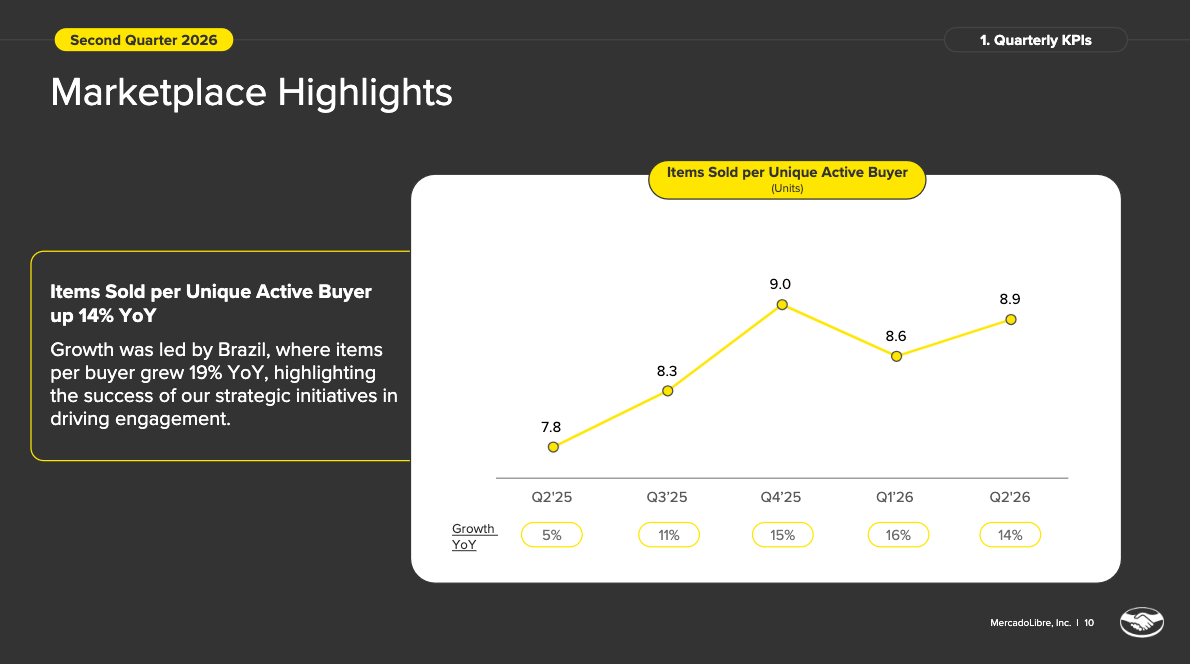
- Items per unique active buyer: up 14% YoY, with Brazil +19%
- 50 to 90 day non performing loan ratio: 7.0% for the total credit portfolio, close to historic lows (loans where borrowers have stopped paying interest)
3 - Outlook
MELI doesn't provide formal forward guidance the way most companies do (they never have). So there's no specific revenue or margin number to show here. What management did lay out is the intent behind their current margin trajectory: continued reinvestment into engagement, credit scaling, and logistics capacity, with a focus on profitability. What they expect:
- Credit portfolio keeps scaling, with $2.1 billion invested into portfolio growth this quarter alone
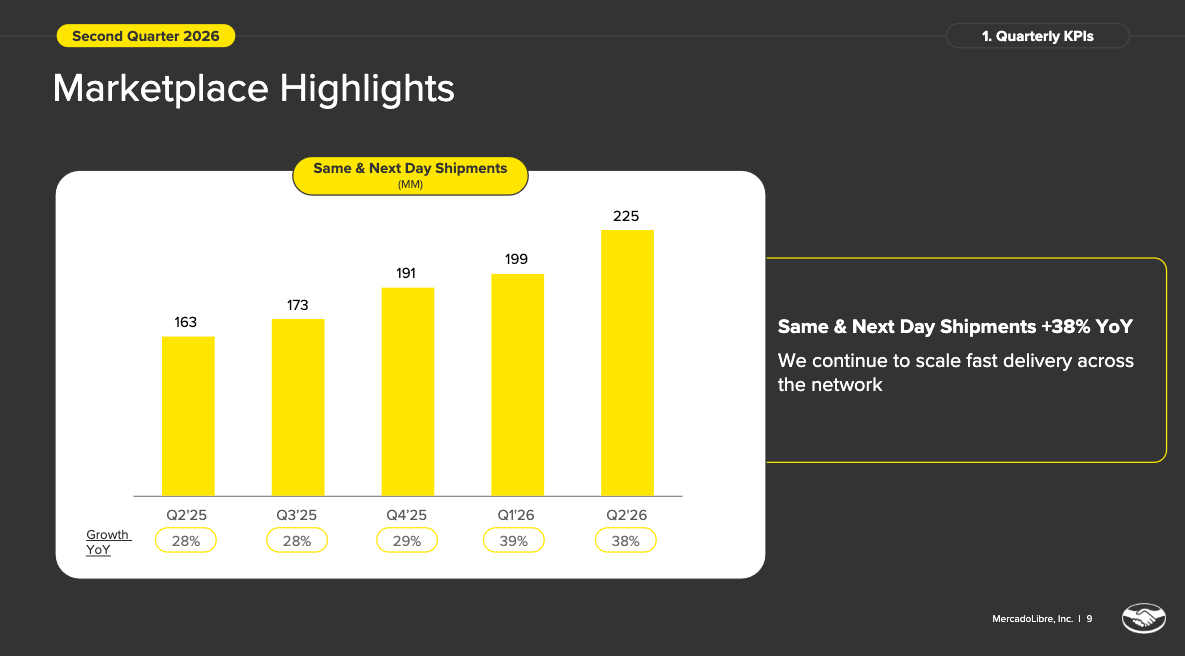
- CapEx of $441 million for the quarter, funding logistics and fulfillment expansion including cross-border trade capacity
- Cross-border GMV growing approximately 60% YoY, with volume from the Chinese fulfillment center +170% quarter on quarter
- Management reiterated that margin compression is a deliberate choice tied to long term engagement, not a sign of competitive pressure eroding the business
4 - Business highlights
The ecosystemic user data was at the center of this quarter, and I think it's worth taking a little more time to break that down. Management disclosed that users active on both the marketplace and Mercado Pago carry 70% more GMV and 90% more total payment volume than users active on only one side, along with double the assets under management. Contribution profit per ecosystemic user, they said, is a multiple of what a marketplace only or fintech only user generates. And this segment is growing 37% year on year, faster than any other user cohort the company tracks.
Brazil expansion
Brazil remains the clearest proof point for this. Daily active users have grown faster than monthly active users every single quarter since the shipping threshold change, when MELI cut the Brazil threshold from R$79 to R$19 in Q1 2026. So the land and expand strategy seems to be working. I think it's a matter of time before they start raising the threshold incrementally, once customers are more embedded in the ecosystem.
Credit portfolio
The credit business is another segment worth paying closer attention to. The credit portfolio hit $16.4 billion, up 75% YoY, and non performing loans sit close to a historical low of 7%. Credit card specific NPLs came in even lower at 4.6%. NIMAL, the net interest margin after losses, improved from 18% to 21% quarter on quarter, largely because provisions in the Brazil consumer book normalized after a temporary spike last quarter. Overall, it's good to see MELI managing the portfolio diligently, and the numbers look healthy.
5 - Management commentary
CFO Martin de los Santos explained why growth and asset quality have moved together, describing the scaling of the credit card business, which the company "only offers to lower-risk users," as "highly synergistic with our marketplace, where we have a large base of high-quality engaged users to draw from." I think that's in large part why 75% credit growth hasn't come with rising defaults, which is great to see, because it means they aren't prioritizing growth over the quality of that growth.
On margins, de los Santos pushed back on the idea that compression signals weakness, noting the quarter was "broadly stable" sequentially and that the year over year decline reflects "a deliberate choice to continue prioritizing investment in long-term engagement, growth, and scale over near-term profitability."
On cross border trade, CEO Ariel Szarfsztejn said "we are extremely satisfied with the trajectory," citing triple digit growth in Brazil and Argentina and a Chinese fulfillment center whose volume is "growing 170% quarter over quarter."
6 - My take
This was yet again a great quarter from MELI. It's one of those businesses you don't really have to worry about as an investor, because they always deliver. All headline metrics are very strong except for margins, which I think is worth watching closely and is also the reason the stock dipped 5%. Management is very explicit that the compression is intentional, but it's always important to stay critical and not simply take their word for it.
While a temporary step back in margins is justified to keep growing at this pace, margins should improve over time.
The credit book is something I wasn't really a fan of from the start, because it introduces credit risk and I'd prefer MELI not to become some sort of bank. That said, this quarter shows they're managing it diligently and the portfolio is healthy. More importantly, they're focused on quality credit growth rather than growth at all costs, which I think is the right way to manage credit risk.
What I'm watching:
- Whether items per buyer growth in Brazil holds up as the shipping threshold changes
- Credit non performing loans as a percentage of the credit book
- Whether margins stabilize, compress further, or start expanding again
What would change the thesis
- Credit non performing loans rising meaningfully to unsustainable levels
- Ecosystemic user growth decelerating materially from today's rate
- Margins continuing to compress while growth rates drop
The most important risk to keep an eye on, in my opinion, is the credit portfolio. The same flywheel driving strong growth and income could become a burden if the macro environment changes significantly and borrowers aren't able to pay their interest or repay their debt. This isn't my base case at all, but I think it's important to be aware of.
Overall: a very strong quarter from MELI. The flywheel continues to turn, and the thesis is fully on track.
As always, none of this is financial advice. Always do your own due diligence before making an investment decision that fits your own risk tolerance and time horizon.
Written by

Subscribe to keep up to date
Subscribe to get regular updates. No spam, unsubscribe anytime.


Member discussion