Premium and Supporter tiers
Duolingo Deep Dive: Master of data driven experimentation
At first glance, Duolingo might look easy to copy until you study what it has actually built. In this deep dive, I connect the puzzle pieces from product to numbers, including the flywheel, moat, key risks and what I think the market is missing.
Introduction
Duolingo (DUOL) is one of those businesses investors tend to have strong opinions on. Bulls see the education platform of the future, with a product that can compound for years. Bears look at language learning, look at AI, and conclude that someone could vibe code a copy on a lazy Sunday.
In this deep dive, my goal is to help you to understand what Duolingo really is, what their flywheel looks like, and what has to go right (and what can go wrong) from here. Then we can judge whether the recent sell off is related to deteriorating fundamentals, sentiment, or some mix of both.
Key facts and figures:
- Monthly active users (MAU): 135 million (up +20%)
- Daily active users (DAU): 51 million (up +36%)
- Paid subscribers: 12 million (up +34%)
- Revenue growth: +40%
- Free cash flow growth: +46%
- Price-forward free cash flow: 12x
- Balance sheet: $1.1 billion net cash
These numbers look great. Yet the stock is down 75% from its 52 week highs at the time of writing.
That disconnect is exactly why I think this is worth looking into. But before discussing valuation or stock price action (and what caused it), we need to understand the business and product. If you’re in a rush, jump to section 17, Verdict: My Duolingo thesis, which is the compressed version.
Let’s start at the root of the business.
1 - The problem Duolingo is solving
Learning is a massive, persistent demand curve. Most people don’t fail at learning because they lack information. They fail because they can’t sustain the habit.
In order to learn a language, you need to be engaged for years, really. It takes years to learn a language, coming every day. We need to keep you engaged, actually doing it. Not only that, we also need to have curriculum for years for you to do that ~ Luis von Ahn (CEO & Founder)
Creating a “habit” is incredibly hard and Duolingo made it their core business. The important challenge that Duolingo has to address is that learning costs energy, discipline, and focus.
Netflix and Spotify are “lean back” products. They fit our default of wanting to relax. Learning is a “lean forward” activity. It costs energy, discipline, and attention. So Duolingo has to reduce friction to a minimum.
The main thing that we do really well, not only do we teach well, but the main thing that we do really well is keep people engaged ~ Luis von Ahn (CEO & Founder)
💡
1 Gamification is the practice of borrowing mechanics from games and applying them to non-game activities to change behavior.
What Duolingo has built
Duolingo took gamification and behavioral science and turned it into a system that makes learning feel like something people want to do, not something they have to do.
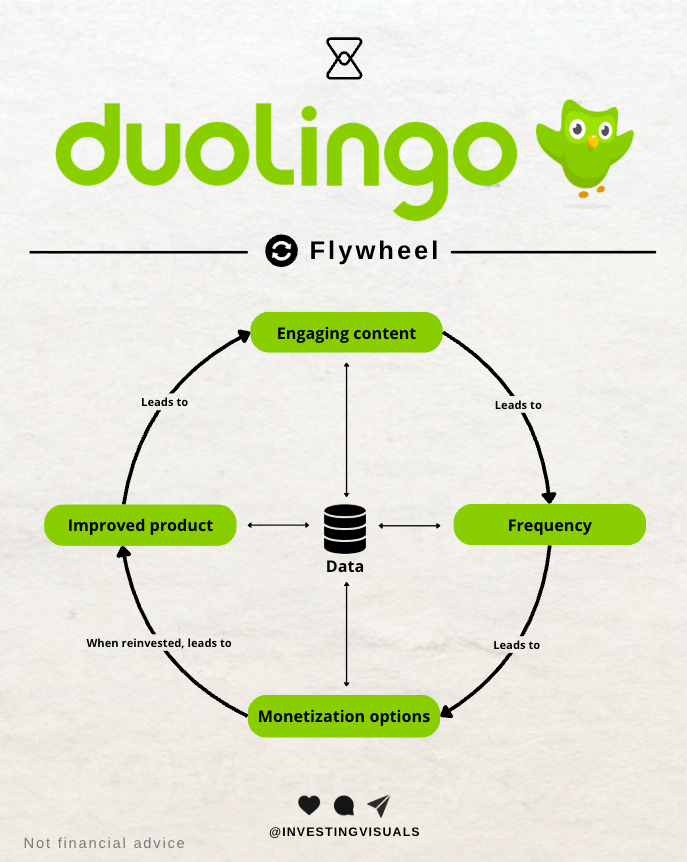
It’s the game loop (streaks, progression, rewards, social mechanics) and the content pipeline that keeps users coming back daily creating a flywheel effect:
- Engaging content creates frequency (Daily active users)
- Frequency creates monetization opportunities (subscriptions, ads, testing)
- Monetization funds reinvestment into a better product and new categories
- A better product and more categories lead to more engaging content
Every turn of that loop produces data. Data on where users churn, what motivates them, which mechanics increase completion, which prompts convert free users into paid users, and which changes harm trust.
That’s why I think of Duolingo as a data driven product company that happens to teach. Not the other way around. And they operate at a massive scale with 135 million monthly users and 51 million daily users. It creates a flywheel that is hard to replicate.
Before I break down their product system, the founding story matters because it explains why Duolingo looks and feels the way it does today.
2 - Founding story
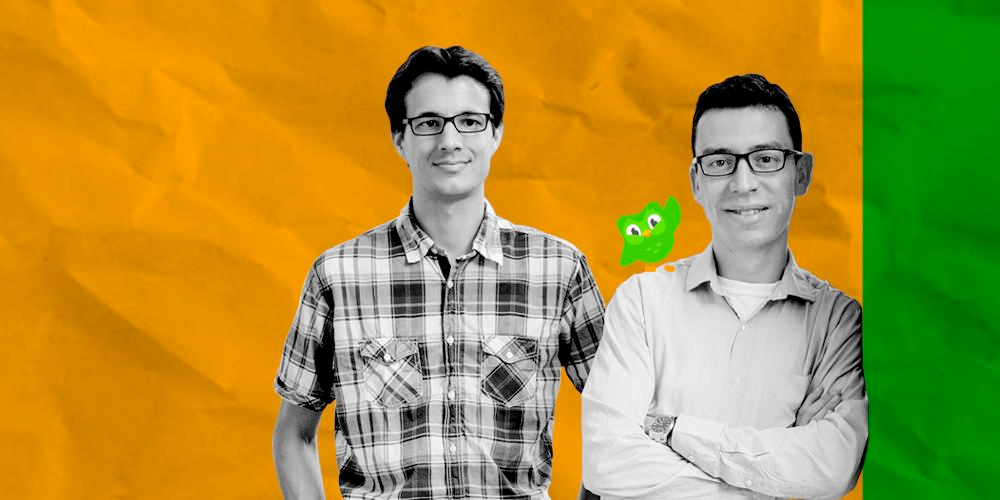
Duolingo’s was founded by two engineers, Severin Hacker (badass last name by the way) and Luis von Ahn. They met at Carnegie Mellon, where Luis was a professor and Severin his PhD student.
Luis grew up in Guatemala and saw how access to education changes outcomes. In previous interviews, he highlighted that much of his personal experiences in Guatamala led to the vision Duolingo still has today: Develop the best education in the world and make it universally available.
💡
Duolingo is the combination of the latin word "Duo", meaning "two" and "lingo", which is slang for language. Thus: "two languages" or a second language.
Timeline - From an idea to a multi-billion company
I'd like to spend some more time on the road that led to what DUOL is today because it really helps understand what they've been building over the past 15 years and where that could lead them in the future.
- 2011: Hacker and von Ahn start Duolingo around a simply belief: education should feel like something you want to do every day. Not something you have to do.
- 2011 to 2012: The private beta turns into a public launch. The early results speak for themselves: People do not just try it, they come back. That’s the first proof that their vision seems to work.
- 2012: The iPhone app launches which is a major step for them and they continue to build from here, continuously being laser focused on their mission to teach better.
- 2014 to 2015: Funding rounds back the idea that Duolingo can be a platform. Not just a "course library". Investors like Union Square Ventures, New Enterprise Associates and CapitalG give the company the runway to keep investing.
- 2016 - 2017: Duolingo starts building real monetization and credibility and introduces subscriptions along with English tests, which expands their mission into something more tangible.
- 2021: Duolingo starts trading on Nasdaq under the ticker DUOL. The IPO is priced at $102 per share and trading begins on Nasdaq on July 28, 2021.
- 2022: This year marks their first real step beyond languages with the launch of math, applying the same ingredients that led to the success they had with languages and expanding their curriculum.
- 2023: They start using AI to further improve their content and increase time-to-market. Duolingo Max launches with GPT based features like Roleplay and “Explain My Answer,”.
- 2024: Duolingo uses Duocon to show where the product is going next, with immersive practice like Video Call with Lily and Adventures that deepen the learning experience for users.
- 2025: Expanding Video Call to Android, launching 148 new language courses, and introducing Chess, stating the course drew “millions of daily learners” in 2025.
In short
The original vision to "develop the best education in the world and make it universally available" shows throughout the timeline. Since going public, Duolingo kept widening their curriculum beyond languages, with Math, AI powered learning via Duolingo Max, more immersive practice like Video Call, and fast new course launches including Chess.
Next, let’s talk about the people running it.
3 - Leadership team
Duolingo is still run by its founding 'duo' (no pun intended).
Luis von Ahn is the co-founder, CEO and board chair. Before Duolingo, he created reCAPTCHA, which was acquired by Google. Severin Hacker (awsome surname by the way) is the technical cofounder and CTO. He is still deeply involved in the engineering side of the business, and that continuity matters because Duolingo’s advantage is not marketing. It is product iteration at scale.
Around them, the leadership bench is experienced and well aligned with what the business needs.
- Matthew Skaruppa joined as CFO in 2020 after Goldman Sachs, KKR Capstone, and Bain
- Robert Meese brings go to market and business development experience from Google and Google Play
- Natalie Glance has been at Duolingo since 2015 and came from Google engineering management
- Cem Kansu has been at Duolingo since 2016 and led monetization and the subscription launch
- Ryan Sims joined in 2018 from Stripe and Rdio and leads product experience and brand identity
- Manu Orssaud joined in 2020 from Spotify and has global marketing experience
- Stephen Chen brings legal and security experience from Proofpoint, VMware, and Yahoo

Leadership changes
The most recent change is a planned CFO transition. Matthew Skaruppa is stepping down, and board member Gillian Munson took over in February 2026.
Duolingo has not disclosed detailed reasoning, but it's good to see a smooth planned transition instead of a messy exit.
Gillian Munson has been on Duolingo’s board since 2019 and served as Chair of the Audit, Risk and Compliance Committee. She has been CFO of Vimeo since April 2022, and before that she was CFO at Iora Health until its sale in 2021.
To summarize: Duolingo is founder led, with stable leadership and relevant experience across product, monetization, and platform scale. A great combination of visionary leadership and experienced senior executives.
Onto the part that often gets ignored, but to me is very important.
4 - Culture
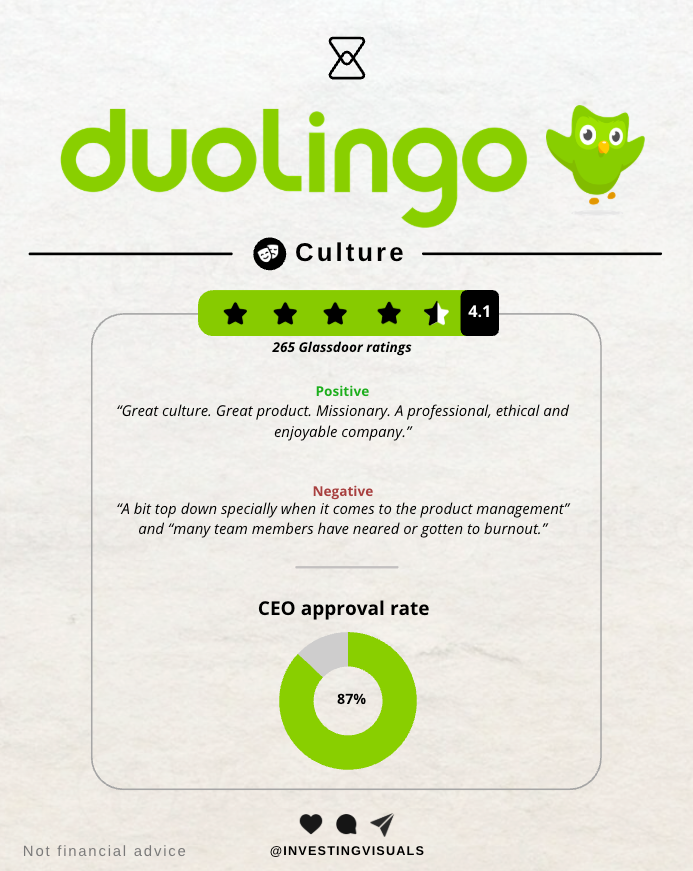
I think culture is an underappreciated and often overlooked part of investing. Ultimately, it’s the people who make the business. When looking at Duolingo, they are very much a mission driven business. They do so through 12 operating principles.
I won't cover all of them, but some of them include:
- Learners first
- Prioritize ruthlessly
- Take the long view
- Test it first
- All for One, and One for All
I'm a great fan on these kind of principles because it helps guide decisions day-to-day decisions of employees.
At the same time, this does not feel like a soft culture. The quality bar is high, speed matters and when you combine high standards with fast shipping, you usually attract builders who like ownership.
If I had to summarize the cultural DNA in a few bullets:
- Data and experiments drive their decisions
- The product stays playful, but quality standards remain high
- Small improvements compound through continuous shipping
People working at Duolingo describe them as smart, mission driven, and genuinely kind, with strong craft in design and product. The flip side is that high standards and fast shipping can feel intense.
5 - Gamification and behavioral science
Behavioral science is the study of why people do what they do, and how habits form and change. It combines insights from psychology, economics, and neuroscience to understand real world decision making, motivation, and behavior.
In many ways, Duolingo is behavioral science turned into product design. They build systems that make returning feel obvious, rewarding, and just challenging enough to be meaningful.
5 core behavioral mechanics Duolingo uses
Duolingo is using numerous behavioral mechanics to keep people coming back to their platform. These are five examples of some of their mechanics:
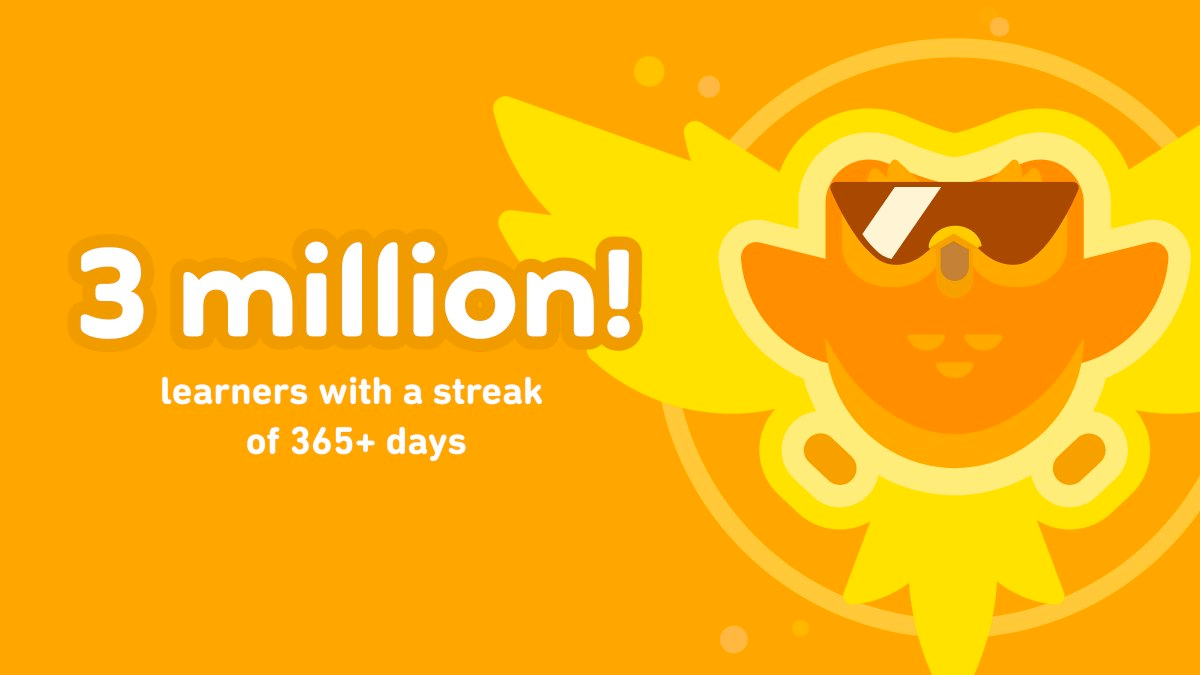
- Daily streaks: Focused on habit formation and loss aversion. Once you have a streak, the cost of skipping feels bigger than the cost of doing a two minute lesso
- XP and leaderboards: They turn learning into progress and friendly competition. Duolingo reported that launching leaderboards increased average time spent learning by almost 20%
- Reminders: Reminders are made to feel like a gentle nudge. Along with their Owl Duo as a mascot, it create a more personal brand cue
- Spaced repetition: Duolingo explicitly builds spaced repetition into lessons and personalized practice so the app brings back items before you forget them
- Energy system: This is used as a pacing mechanic. It pushes you toward accuracy and slows down mindless tapping
An interesting read is this blog about notification timing and the challenges of sending hundreds of millions of notifications each day. It'll give you an idea about the actual engineering behind seemingly small features.
6 - An experimentation engine
None of the mechanics above are created by accident, they are build because the data says they make learners show up more often, learn better and/or pay more.
The scale of their experimentation
- In a 2020 engineering post, they said it was common to have a few hundred experiments running simultaneously in a given week. I haven't been able to find more recent numbers, but it's likely much higher today
- In their IPO prospectus, Duolingo disclosed they generated about 2.3 billion tracking events per day across roughly 1,500 unique event types
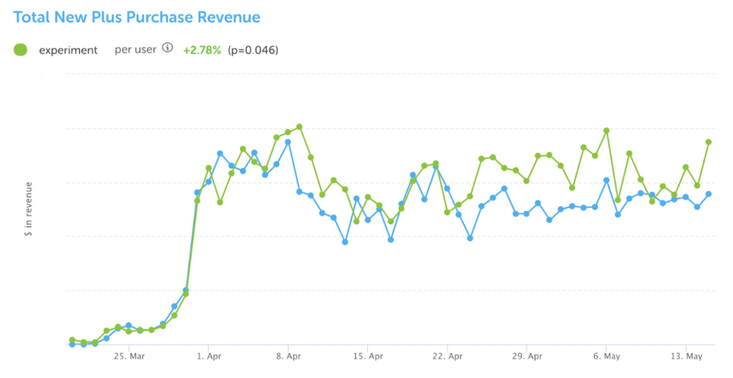
- In Q1 2025, they shared that they run 750+ A/B tests 2 per quarter
💡
2 An A/B test compares two versions of the same feature by showing each version to different groups of users and measuring which one performs better. If the new version improves the key metric, you roll it out.
Nothing that Duolingo does, is a coincidence. It's always backed by data.
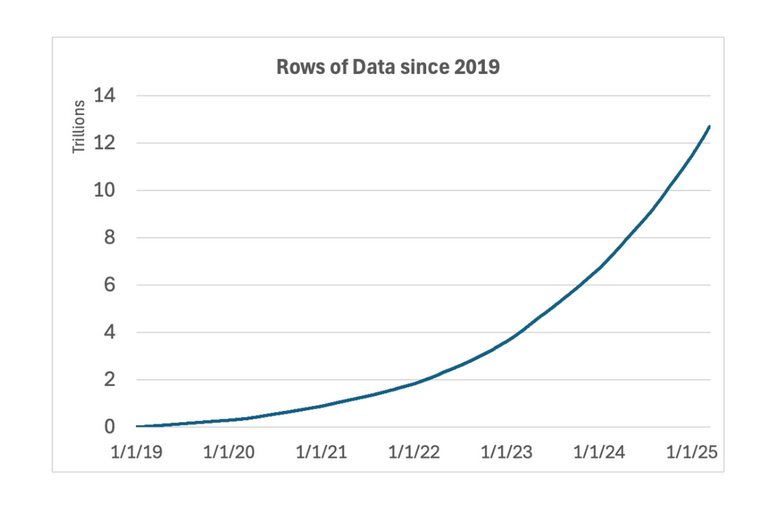
In the past six years, the total number of rows we've stored in BigQuery has grown dramatically, doubling every year to roughly 13 trillion rows today ~ Duolingo
What A B testing looks like in practice
Duolingo runs tests on controlled subsets of users, often segmented by:
- Platform
- Language
- Device type
- Geography
- User segment
They ramp carefully, set guardrails, and shut down tests that harm key metrics. They also have internal tooling that standardizes reporting and statistical analysis.
“Test everything.” This is one of the key operating principles that we follow at Duolingo in order to continuously improve the learning experience for our users. It means we rely heavily on experiments and data to help us make informed decisions about any updates or new features we launch ~ Duolingo Blog
In short
Duolingo’s edge is not linked to a single feature, but a data driven system that continuously improves the product by turning scale into insight, and insight into shipping. Leading to the flywheel shown earlier.
7 - What users say
I always like to "sanity check" the product through real user feedback.
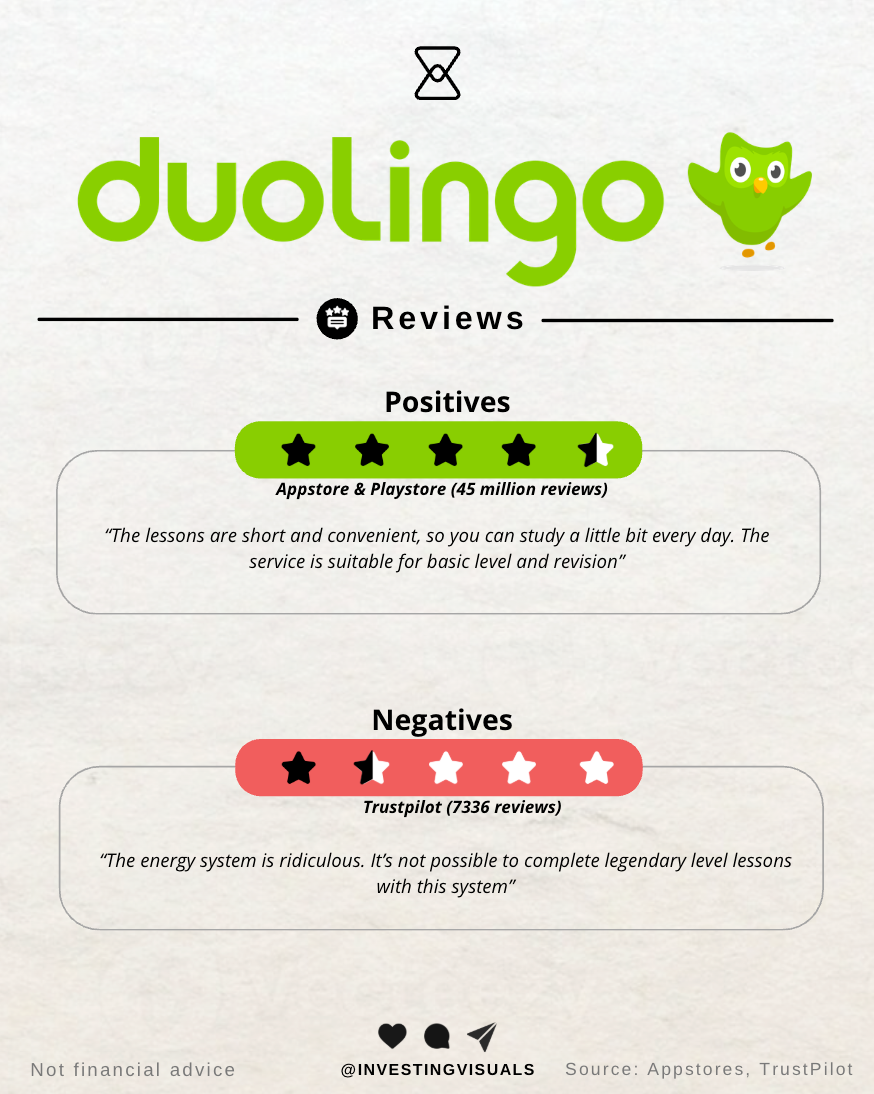
- App store: 4.7 out of 5 with 4.7 million ratings
- Playstore: 4.6 out of 5 with 41.2 millio ratings
- G2: 4.5 out of 5 with 140 ratings
- TrustPilot: 1.5 out of 5 with 7,336 reviews
The disconnect is striking, especially between app stores and Trustpilot. But it makes sense when you think about incentives.
- App store reviews skew positive because satisfied users rate in product, often after a good experience.
- Trustpilot skews negative because people often show up when something breaks, especially billing, cancellations, refunds, or support.
Positive reviews
Overall, this is a wonderful learning tool for a new language ~ App store review
I like the gamification of learning a new language. Also love the characters and voices. The streaks are fun, too ~ G2 review
The lessons are short and convenient, so you can study a little bit every day. The service is suitable for basic level and revision ~ TrustPilor review
Negative reviews
The energy system is ridiculous. It’s not possible to complete legendary level lessons with this system ~ Google Play store review
This is a crap app. Just annoying with ads, they lie it is free! Bull crap… Constantly interrupting the lessons. Scam! ~ TrustPilot review
I do not like the power ups and believe it hinders how long I can learn each day ~ G2 review
Key takeaway
The core product is loved at scale. You do not get a 4.7 out of 5 with millions of reviews unless you are doing something right. But the critique matters too, because it points to Duolingo’s balancing act:
Keep the habit fun and engaging, while not breaking trust when monetization gets pushed. That balancing act becomes very relevant when we talk about the stock drawdown.
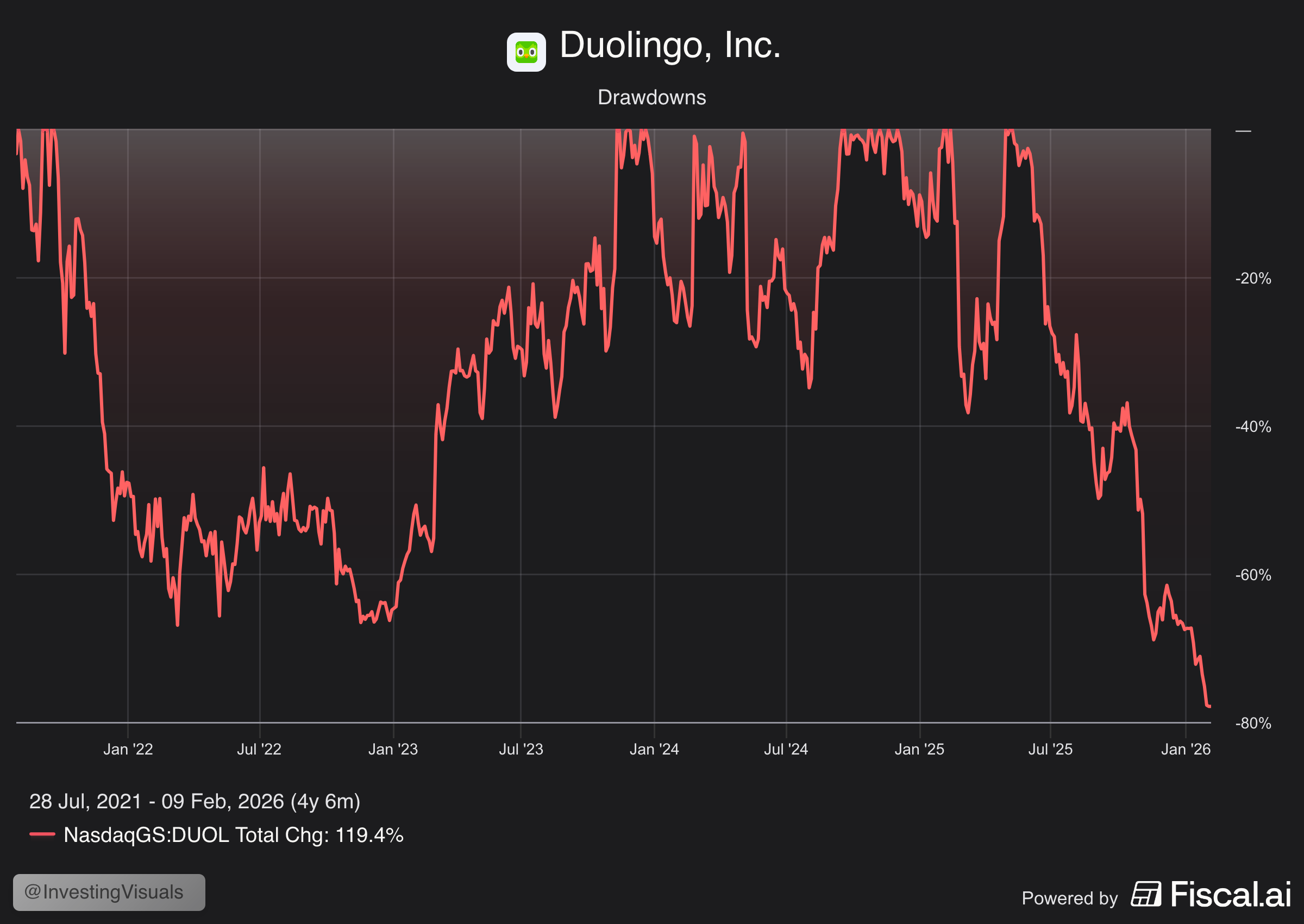
8 - Why the stock crashed 75%
In may 2025 Duolingo's stock traded at $540. At the time of writing this deep dive, it trades at $120. That is a drawdown of about 75%, and the largest since going public.
So what happened?
I think it is a perfect storm, driven by four forces.
Valuation reset
Duolingo went into the May 2025 peak with extremely high expectations. When a stock is priced for perfection, you do not need “bad news” for it to sell off. You just need something that introduces doubt.
In mid 2025, AI product updates intensified that doubt. Investors started asking whether language learning was one of the most obvious disruption targets.
AI fears
The bear narrative: if large language models can chat with you, correct you, and translate instantly, why use a dedicated learning app?
That fear is not new, but it got louder as AI assistants improved and as the market became more sensitive to disruption stories.
My take is that AI is more likely to be an accelerant for Duolingo than a threat. Luis has described the speed impact directly:
Developing our first 100 courses took about 12 years, and now, in about a year, we’re able to create and launch nearly 150 new courses. This is a great example of how generative AI can directly benefit our learners ~ Luis von Ahn, CEO & co-founder
Put simply, you do not get the same user experience from a generic AI model as you do from a product designed around habit, progression, and structured learning. Some users will prefer AI chat. But Duolingo’s user growth still being above 30% suggests disruption is not showing up clearly in the numbers (yet).
Management leaning into longer term initiatives
This one matters more than you might thing. From their Q3 2025 shareholder letter:
In Q3 we decided to shift the balance towards longer-term initiatives. In particular, we’re investing proportionally more in teaching better, and we’re prioritizing user growth over monetization in the A/B tests that get launched.
That message probably spooked the market which priced Duolingo for continued monetization acceleration. It raised questions like:
- Is the monetization engine weaker than expected?
- Are they seeing early signs of slower demand?
- Are they responding to AI fears by chasing users?
A key point here is that if they are prioritizing user growth, that should show up in the numbers over the next few quarters. If it does not, and monetization also slows, the sell off might be justified. Right now the market is front-running a persistent slowdown and it's up to Duolingo to proof differently.
Broader software sentiment
Even with solid execution, the broader software sector dragged multiples down. Duolingo was fighting its own narrative and the macro mood at the same time.
In the remainder of this deep dive, I’ll cover who is really competing with Duolingo, how defensible their system is, whether the numbers and valuation justify owning the stock from here, and tie it all together in my final verdict.
Let's start with mapping their competitive landscape because that is in my opinion where the market is most confused about.
9 - Core competitors
Duolingo is a habit product. It is not only about who teaches best. It is about who wins daily attention. Through that lens, I think there are three layers of competition.
This post is only for subscribers on the
Premium and Supporter tiers
Subscribe to continue reading
Written by