
AI photonics: All roads lead to Sivers
A $1.2B market cap business at the intersection of several major tech trends. But what makes them tick and how attractive is the stock after it's up 10x in just 6 months?
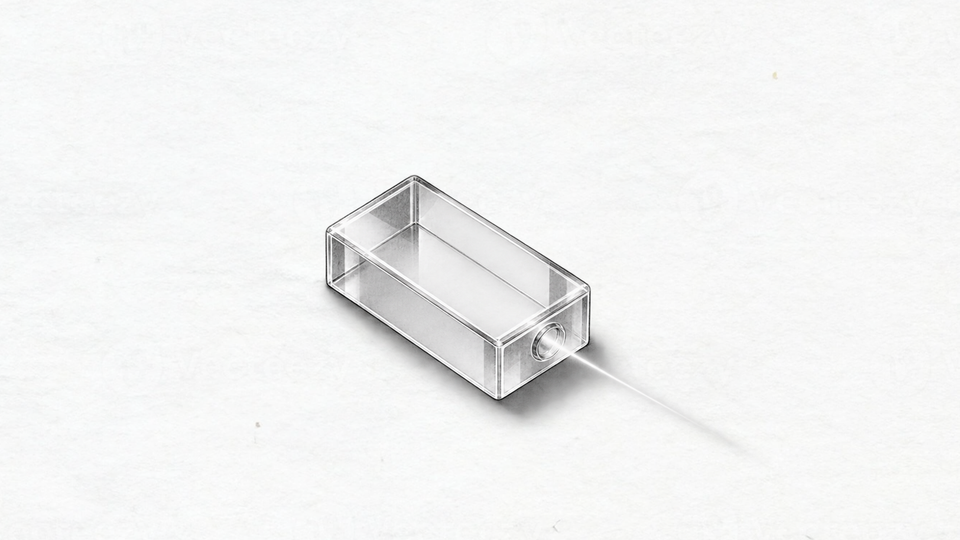
Sivers (SIVE) first popped up on my radar about one month ago (early April). Back then I did not know anything about the business except that it was operating at an important constraint in the AI supply chain: photonics. I put it on my watchlist to research later.
In the meantime, the stock took off and increased ~365% in a single month and is now up 970% in just a little over half a year. Yet it is still just a $1.2B market cap business with an opportunity pipeline of $453 million (up +65%) and positioned at the crossroads of several long term tech trends.
Before I make any investment decision, every business has to pass three key questions:
- Does it benefit from one or more major tech trends?
- Is it unique within its respective sector?
- Do I fully understand the business and what they do?
It already passed the first, but I could not answer the second and third question without doing proper research. I am perfectly fine with missing out on the initial run of the stock because it was simply too early for me to get in, given the investment framework I have. The aim of this post is to be able to answer the second and third question and decide if this could be a great investment from here.
1 - Management
Execution is the single most important factor that drives future returns for Sivers, so it is important to know who is actually at the helm here. Sivers operates two units:
- Photonics (Glasgow)
- Wireless (Kista)
Group CEO Dr. Vickram Vathulya (appointed August 2024) holds a Ph.D. from Lehigh and an MBA from UC Berkeley Haas, with 25+ years across NXP, Maxim Integrated, and Nuvotronics, where he ran a full operational turnaround.

CFO Heine Thorsgaard joined in September 2025 with 20+ years in tech finance, most recently at Napatech. CRO Raymond Biagan was added in November 2025, signaling a deliberate push to professionalize the commercial function as customer traction builds.
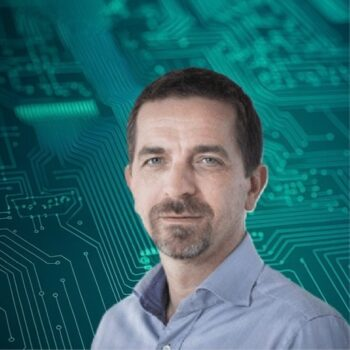
Dr. Andrew McKee, Managing Director and CTO, has been with the operation since 2001. He is a founding member of CST Global, which became Sivers Photonics. His Ph.D. from Glasgow focused on Photonic Integrated Circuits, and he personally leads the InP100 platform roadmap.
In February 2025, Alexander McCann joined as Senior Advisor, former COO at Linear Technology (sold to ADI for $14B) and SVP at Dialog Semiconductor (sold to Renesas for $6B). For a company now needing to scale from R&D quality to datacenter volume, that kind of operational pedigree is exactly what you want aboard.
All in all, the C-suite seems very experienced and highly specialized in this niche segment of the AI supply chain.
2 - Important context
Before diving into what Sivers really does, it is important to understand the industry they operate in: they are part of the photonics industry, the practical use of light to do useful jobs like sending data, sensing, or processing signals.
The deep dive below goes into much more detail and I highly recommend reading it if you're (relatively) new to photonics.
From $3 billion to $91 billion market: A deep dive into the photonics value chain
The AI connectivity market is set to grow rapidly over the next three years. This deep dive covers everything you need to know about the industry and the best positioned businesses to benefit as demand grows exponentially
 Jan (Investing Visuals)
So what?
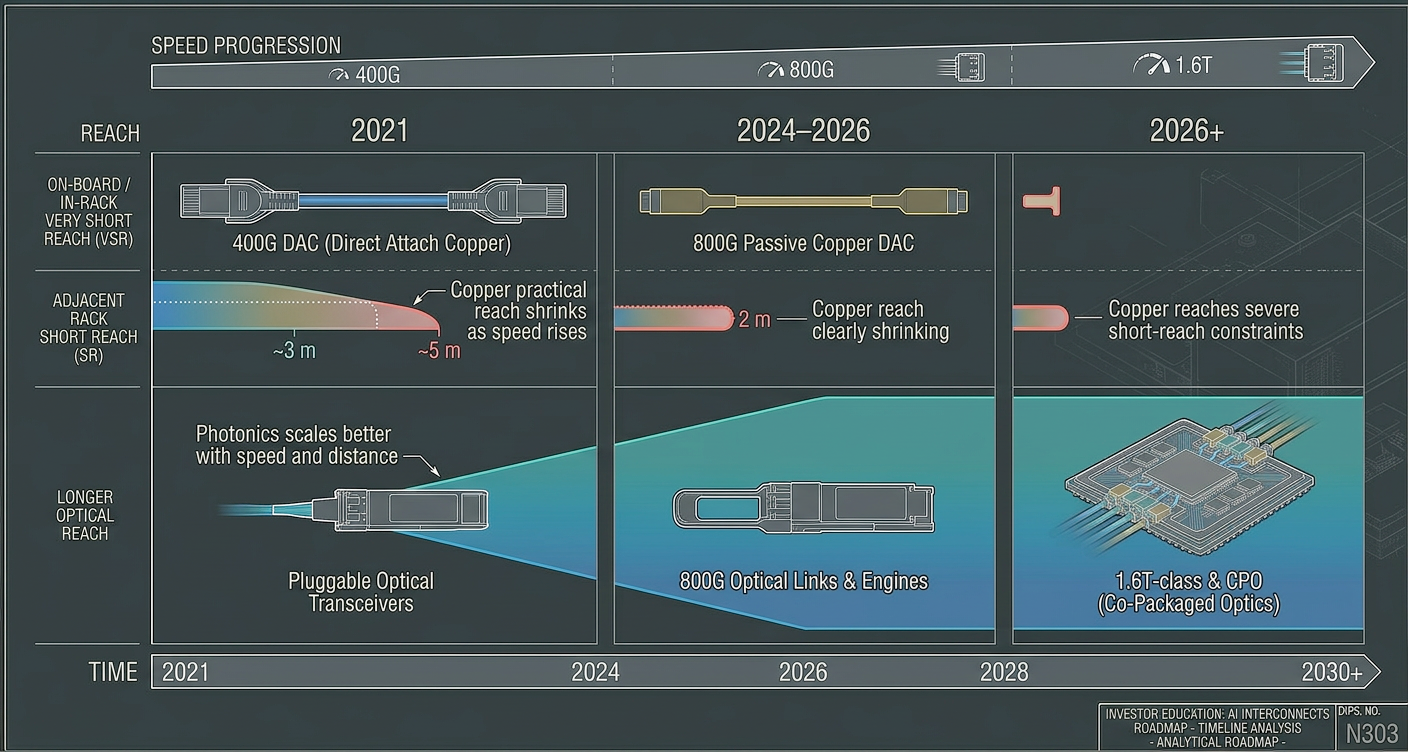
AI and cloud computing are no longer limited only by how fast chips compute, but by how fast they can exchange data. For a long time, copper cables were the way to go. They can send up to 800 gigabit per second (or 100 gigabyte), but the effective distances get shorter as more information is pushed through. Copper is reaching its limits and photonics are the solution to that.
💡
Speeds are often referred to in "G's", meaning gigabits. If you divide that by 8, you get the speed in gigabytes. So 400G = 50GB, 800G = 100GB etc.
A timeline
- 2021: The maximum speeds are around 400G, with copper being able to handle short links of roughly 3–5 meters. This speed is the equivalent of streaming about 100 HD movies at the same time, every second
- 2024–2026: Copper gets pushed to 800G, but the cable reach shrank to about 2 meters
- 2026 and beyond: Copper has reached its physical limits, so this is where photonics takes over to increase speeds up to 1.6T over both shorter and longer distances
If you would like to fully understand how photonics works, you can read more about it here. But to summarize it: photonics is using light to carry information. Instead of pushing information through copper wires, photonics guides it through tiny optical paths. Sivers is a crucial enabler in this segment.
3 - What they solve
AI systems, telecom infrastructure, satellite terminals, and sensing platforms all hit the same constraint: moving more data, more efficiently, with less power usage. Optical links solve that problem, but they depend on reliable laser light sources and integration across multiple stack layers.
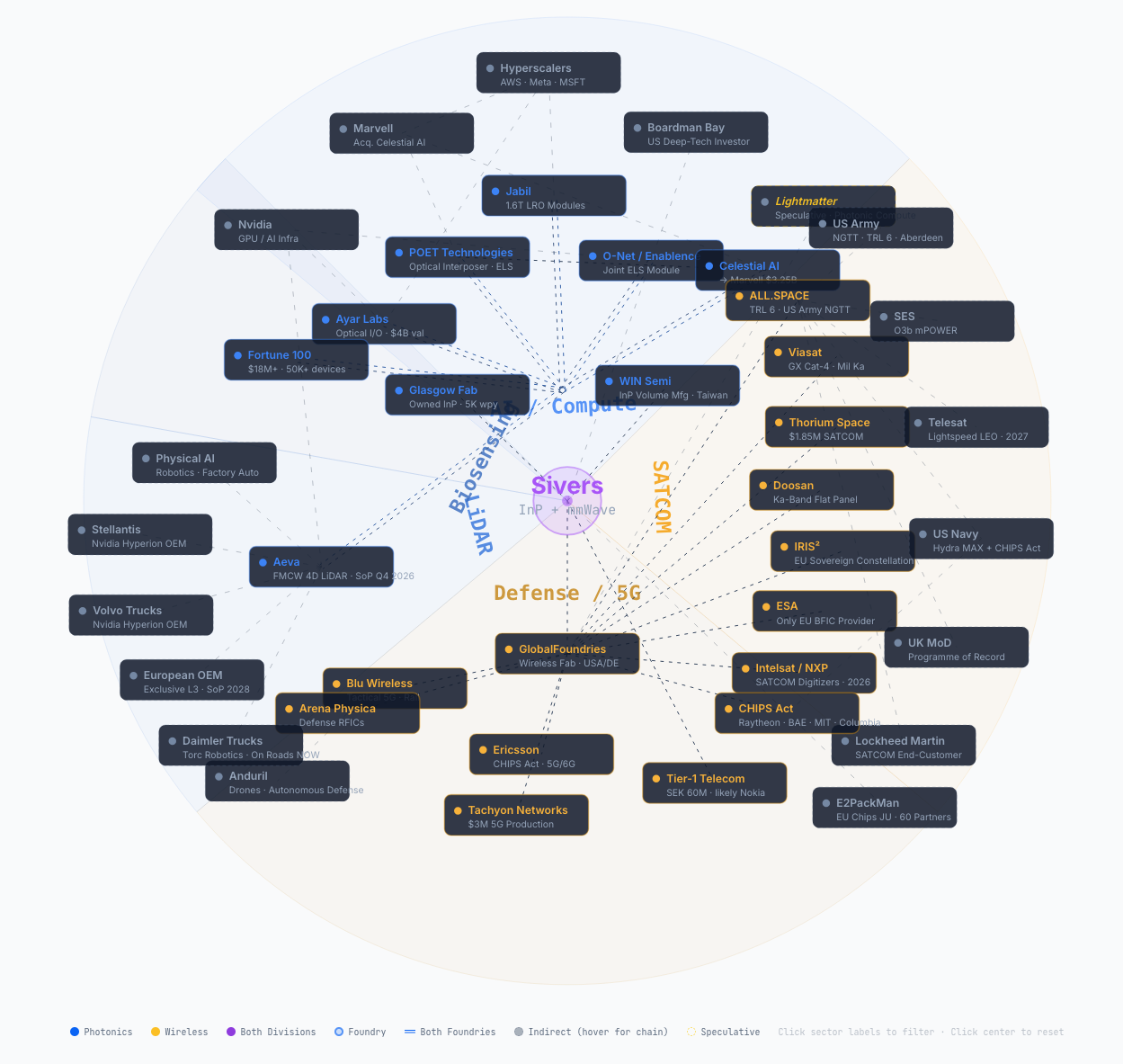
Sivers is operating at the intersection of these constraints. In photonics, it provides the laser and optical building blocks that make these advanced optical engines possible. In Wireless, it provides RF and antenna solutions for high frequency connectivity in SATCOM, aerospace, and defense. That is what I think is the most interesting part about Sivers: they are riding several major technology shifts at once.
The ecosystem map below, made by Maikel Wåhlin (@Plaskpojken), shows beautifully what that looks like. It seems all roads lead to Sivers. But what exactly do they do?
4 - The technology explained
This post is for subscribers only
Subscribe to continue reading
Written by